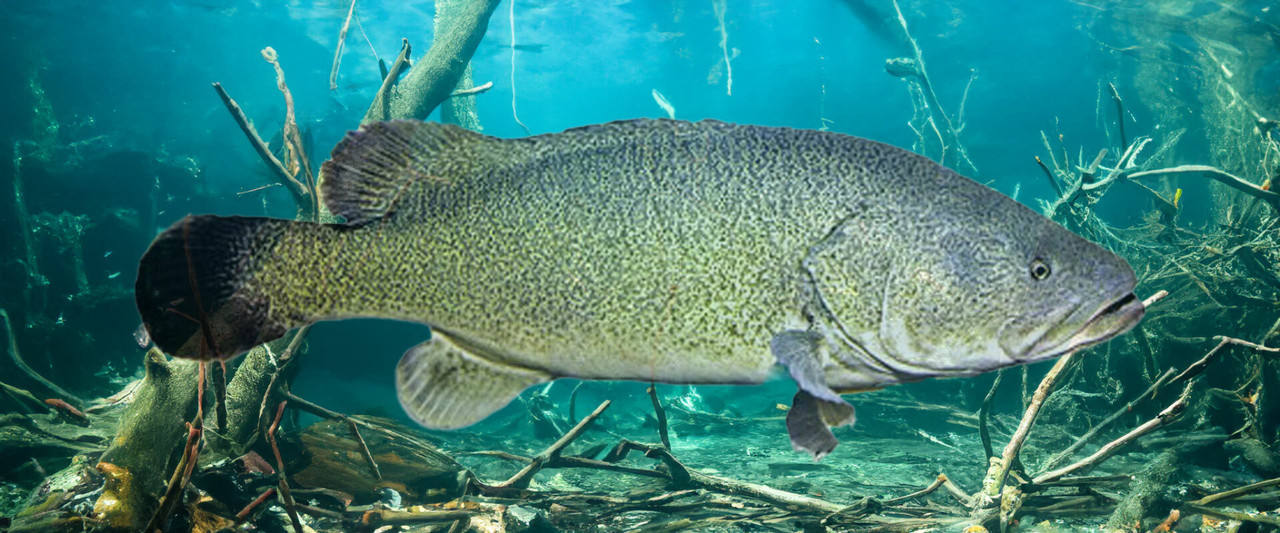
A Tackle Shop Guide to Murray Cod Lures
Targeting Murray Cod is as much about psychology as it is about tackle. These fish are highly territorial and will often strike a lure not because they are hungry, but because they are defending their snag. Success comes down to understanding how water clarity and retrieve speed affect their predatory instinct. This guide breaks down the technical details of Murray Cod lure selection and the brands that consistently perform in Australian rivers and dams.
A Note From Our Local Experts
"There is a classic debate we often see about Murray Cod lure colour selection: natural, bright, or dark. When I look at our sales data, the numbers don't lie—we sell an incredible amount of dark and purple lures for Murray Cod.
It comes down to water clarity. In the murky river systems where Cod often lurk, a dark lure finish provides a much sharper contrast against the background than a natural pattern, making it easier for the fish to track. While we sell a massive range, brands like Barambah (especially the Bidjiwong) and Jackall with their Pompadours are massive movers. For deep diving, the StumpJumper remains our biggest-selling all-round diver, while TT Spinnerbaits are easily the most popular choice in our online store for anglers fishing heavy timber."
- Ben Czulowski, Owner, Fishing Tackle Shop
Murray Cod Lure Application Guide
Match your lure style to the structure and the aggression level of the fish.
| Lure Style | Target Environment | Recommended Action |
|---|
| Surface Paddlers & Crawlers |
Shallow margins, overhanging trees, and surface 'boofing' zones. |
Slow, rhythmic crawl with frequent pauses. |
| Spinnerbaits |
Deep inside complex timber, fallen logs, and submerged forests. |
Slow-rolling deep through the heart of the snag. |
| Deep Diving Hardbodies |
Main river channels, steep rock banks, and deep dam walls. |
Trolling or casting with a 'crash and deflect' retrieve. |
Swipe →
Surface Excitement: The "Paddler" Phenomenon
Surface lure fishing for Cod is perhaps the most exciting technique in the freshwater. Lures like the Jackall Pompadour use large 'wings' to create a noisy, splashing crawl across the surface. This vibration mimics a struggling land animal or bird, calling Cod up from deep cover. The key is to maintain a steady, slow pace and most importantly, stay calm when the strike happens. Murray Cod use a 'suction' strike to inhale their prey; if you strike the moment you see the splash, you will often pull the lure away. The secret is to wait 1–2 seconds until you actually feel the weight of the fish on your rod before setting the hook.
Sub-Surface Tactics: Divers and Spinnerbaits
When Cod are sitting deep, you need to go to them. Deep-diving hardbodies like the StumpJumper are engineered to reach specific depths. By 'banging' the bib of the lure into logs, you create a deflection that often triggers an aggressive reaction strike. In the tightest timber where trebles would snag, the wire-arm design of a TT Spinnerbait acts as a fender, allowing you to roll the gear through the heart of the snag where the biggest fish hide.
The Stealth Shift: Silent Baits and Plastics
In heavily pressured dams or crystal-clear rivers, fish can become 'conditioned' to the sound of internal rattles. A silent glide bait or a large soft plastic jerk shad skipped deep into a shaded pocket can be the difference-maker in clear conditions. These offer a more subtle, gliding action than a vibrating hardbody, providing a technical alternative for educated fish that have become wary of loud, rattling lures.
Frequently Asked Questions
How does barometric pressure affect Murray Cod lure fishing?
Murray Cod are highly sensitive to pressure changes. A rapidly falling barometer (often preceding a storm) frequently triggers an intense feeding window. Conversely, a high-pressure system with clear blue skies often sees the fish move deep into the thickest structure, requiring a slower, more deliberate retrieve with spinnerbaits or deep divers.
Is a Murray Cod lure that is 150mm or larger actually necessary?
Sometimes it is beneficial, and it won't spook smaller fish. Cod are highly territorial; a 150mm+ lure is often seen as a rival intruder rather than just food. A large lure will often trigger a violent aggression strike from a 50cm fish just as easily as it triggers a hunger strike from a metre-plus giant.
Do I need to use a wire trace for Murray Cod teeth?
No, wire is not recommended. While Cod have a large mouth with small, raspy teeth, they do not have the slicing teeth of a mackerel. A heavy fluorocarbon leader (30lb to 60lb depending on the structure) is the standard choice. It provides the abrasion resistance needed for timber while being much harder for the fish to see than wire.
What type of rod is required for throwing the larger Cod lures?
Casting large surface paddlers and heavy swimbaits requires a specific rod with a high casting weight rating (often up to 100g or more). A heavy-action swimbait rod or a stout baitcasting outfit is essential to safely cast these lures and, more importantly, to have the leverage to pull a big fish away from a snag immediately after the strike.
How does water temperature change my retrieve speed for Murray Cod?
Fish biology plays a massive role here. In cold water, a Cod’s metabolism slows down, and they are less likely to chase a fast-moving target. You must use a 'dead-slow' retrieve with long pauses. As the water warms up in summer, the fish become more active and will aggressively chase faster, more energetic presentations.