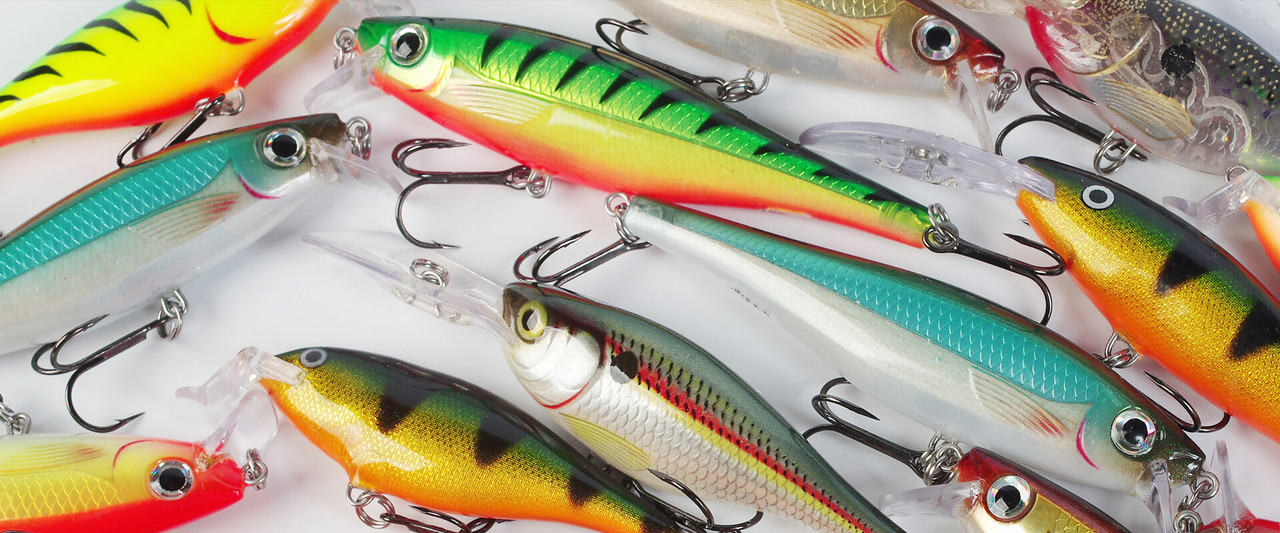
A Tackle Shop Guide to Hard Body Lures
Walking into a Hardbody fishing lure section can be overwhelming. You’re met with a wall of different shapes, bib sizes, and colours. But once you understand that every design feature serves a specific purpose, choosing the right hard body becomes a lot simpler. This guide is here to help you look past the paint job and understand the mechanics of how these lures actually work in Australian waters.
A Note From Our Local Experts
"In the shop, I often see anglers get caught up in finding what they believe is the 'perfect' colour. While colour has its place, it’s the action and depth of the lure that does the heavy lifting. I've had fishing sessions in the upper reaches of the Minnamurra River where the fish wouldn't touch a surface lure, but the second I switched to a suspending model and let it sit dead in their face down in the strike zone, it was game on.
My advice is to always carry a mix of buoyancies. Hard body lures are an investment, and having a few different 'options' in your lure box—a surface lure, a shallow runner, a deep diver, and a suspender—is the smartest way to ensure you can adapt when the fish change their behaviour no matter whether fishing the fresh or the saltwater."
- Ben Czulowski, Owner, Fishing Tackle Shop
Understanding Lure Buoyancy: Surface, Diving, and Suspending
The buoyancy of a lure determines its behaviour the moment you stop winding. Mastering these "options" is how you adapt to changing fish behavior in any environment.
- Floating Lures (Surface & Diving): These stay on the surface until retrieved. Inshore, a floating diving minnow allows you to "walk" over oyster racks or weed beds—if you bump a snag, just stop winding and let the lure float up and over. Offshore, floating topwater lures are the primary tools for tuna or kingfish smashing bait on the surface.
- Sinking Lures: These drop immediately upon hitting the water. They are essential for fishing deep holes, fast-moving currents, or getting a vibration lure down to fish on an offshore reef where a floating lure simply can't reach.
- Suspending Lures: These are the "secret weapon" for fussy fish. When you pause, the lure stays suspended in the "strike zone." This allows you to leave the lure in a fish's face for much longer, which is often what it takes to trigger a strike from a wary bass, bream, or barra.
The Bib Factor: Depth and Action
The bib (the plastic lip at the front) is the lure's engine. Its size and angle dictate how deep it goes and how aggressively it moves. Understanding this helps you pick the right model for the ground you're fishing.
✔
Long, Narrow Bibs (Deep Divers & Trollers): Built for reaching depth and high-speed stability with a tight, "shimmering" vibration. Classic examples include the
Halco Laser Pro or the
Rapala X-Rap Magnum , which are the benchmark for targeting pelagics without the lure "blowing out" at speed.
✔
Short, Wide Bibs (Shallow Runners & Crankbaits): Designed for an aggressive "wide wobble" or intense "roll" that displaces water and sends out vibrations fish feel from a distance. The Jackall Chubby and Atomic Crank are famous examples, perfect for "cranking" over sand flats or alongside rock walls.
Pro-Tip: How to "Tune" a Lure That Swims Sideways
After a heavy fight or a knock against a rock, a lure might start "tracking" to one side instead of swimming straight. You can fix this in seconds. Hold the lure facing you; if it veers to its left, use a pair of fishing pliers to very gently bend the front "tow point" (the wire eyelet) slightly to the right. Make tiny adjustments and test it until it tracks perfectly straight again.
Frequently Asked Questions
Why is my lure swimming sideways, and how do I fix it?
A lure swimming sideways is usually "out of tune." This happens when the tow point is slightly misaligned. To fix it, gently bend the wire eyelet in the opposite direction of the veer. Small adjustments are key.
What is the real difference between a 'Round Bib' and a 'Square Bib'?
Round bibs generally provide a more fluid, rolling action and are better at tracking straight at higher speeds. Square bibs (often found on "squarebill" crankbaits) are designed to deflect off structure like rocks and timber, "kicking" sideways to trigger reaction strikes and prevent snags.
Does lure colour actually matter, or is it just for the angler?
It's a mix of both. In clear water, natural, translucent colours usually work best. In dirty or "tea-coloured" water, high-contrast colours like gold, black, or bright fluorescents are easier for fish to see. Choose your colour based on water clarity and available light for the best results.
Why do some hard bodies have a loud rattle while others are silent?
Rattles attract fish in low visibility by sending out sound waves they feel through their lateral line. However, in heavily fished areas or very clear water, a silent lure is often a more effective "stealth" choice to avoid spooking wary fish.