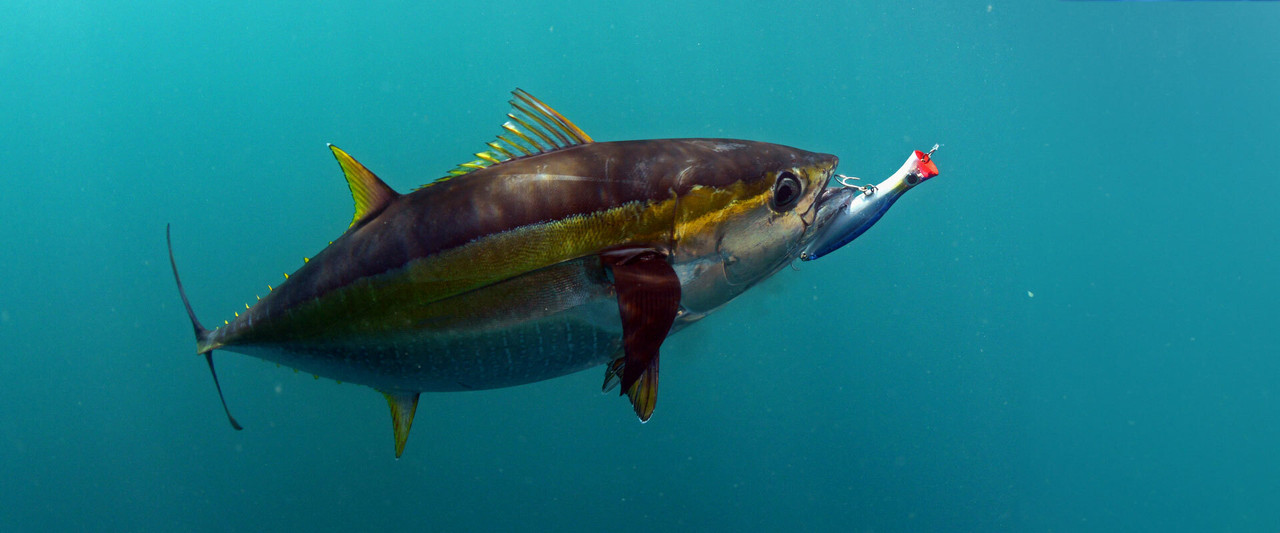
A Tackle Shop Guide to Tuna Lures
Tuna are incredibly fast, but they can also be frustratingly fussy. Catching them consistently isn't just about throwing hardware into the water; it's about matching your lure type to the specific species and the bait they are tracking. Many anglers lump all "tuna lures" into one bucket, but breaking your gear down by species and technique is the only way to build a highly effective tackle kit.
A Note From Our Local Experts
"Here in the Illawarra, tuna time gets a lot of anglers walking through the doors buying up tuna lures, and the talk sometimes revolves around what the fish are feeding on right now and what other customers are buying. Real sales patterns show us exactly what works. If the Stripies (Striped Tuna) are thick, we sell a heck of a lot of 'Xmas Tree' lures.
For the guys casting off the ocean rocks for Longtail Tuna, it's been mostly about heavy, long-casting minnows and stickbaits the past few years like the Yo-Zuri Hydro Monster Shot or the Rapala Long Cast models.
When boats are heading out wide for Yellowfin or Bluefin, Fat Boy trolling skirts and Halco Laser Pro 190s—particularly in the Pilchard (H50) or Red and White (H53) colours—are always moving off the shelves."
- Ben Czulowski, Owner, Fishing Tackle Shop
Matching Lure Type to Tuna Species and Method
You cannot use a one-size-fits-all approach for tuna. Use this guide to match Tuna lures to the environment and the specific species you are targeting.
| Target Species & Environment | Effective Lure Types | Fishing Method |
|---|
| Longtail & School Bluefin (Inshore / Rocks) |
Heavy Stickbaits, Casting Minnows, Metal Slugs |
High-speed casting and retrieving from rock ledges or small boats. |
| Yellowfin & Striped Tuna (Surface Feeding) |
Stickbaits, Poppers, Xmas Tree Lures |
Casting directly into surface feeding frenzies or trolling the edges of the school. |
| Yellowfin & Large Bluefin (Offshore) |
Skirted Trolling Lures, Deep Divers, Bibless Minnows |
Trolling a spread at various speeds through deep water. |
| Suspended Tuna (Mid-Water) |
Metal Jigs, Large Soft Plastics |
Vertical dropping and mechanical jigging when fish are marked deep on the sounder. |
Swipe →
Tuna Lure Colour and Profile Selection: Reading the Water
Your lure choice should be dictated by water clarity and the baitfish present in the area (like pilchards, yakkas, whitebait, or squid). In clear offshore water, natural translucent patterns or exact baitfish matches—like the Halco Pilchard (H50) pattern—are highly productive because they mimic the exact profile of the local bait schools. However, in overcast conditions, early mornings, or stirred-up water, a high-contrast colour like the classic Red and White (H53) provides a sharper presentation, making it much easier for a fast-moving tuna to track and strike.
Frequently Asked Questions
Why do huge tuna sometimes ignore large stickbaits when they are actively feeding on the surface?
This is a common and frustrating scenario caused by a "micro-bait" fixation. When tuna are locked onto tiny whitebait or juvenile pilchards, they will completely ignore a large 150mm+ lure because it does not match what they are actively hunting. You must downsize your presentation to a small, dense metal slug or a heavy 90mm sinking stickbait to "match the hatch."
What is the most effective way to retrieve a sinking stickbait cast into a tuna school?
Many anglers make the mistake of casting into a frenzy and winding as fast as possible. A highly effective tactical adjustment is to cast directly into the baitball and simply let the heavy stickbait flutter and sink on a slack line. The largest tuna often sit underneath the frenzy waiting for stunned or dying baitfish to sink, and a fluttering stickbait mimics this perfectly.
How fast should I actually be trolling my lures for offshore tuna?
Trolling speed depends on the lure profile you have deployed. For skirted lures and deep-diving hardbodies like the Laser Pro, a speed of 6 to 9 knots is standard. However, if you are using specialised high-speed bibless minnows (like the Halco Max), you can troll much faster—often up to 12 to 15 knots. This high-speed technique is excellent for covering vast expanses of open water to locate scattered fish.
How far back in the wake should I set my trolling lures for tuna?
Tuna are often boat-shy, so setting your lures further back than you would for marlin is a smart practice. A common spread involves running your deep diving lures closer to the boat in the clean water on the edge of the prop wash, while pushing your skirted lures or bibless minnows much further back (the "shotgun" position) to target wary fish trailing the boat.