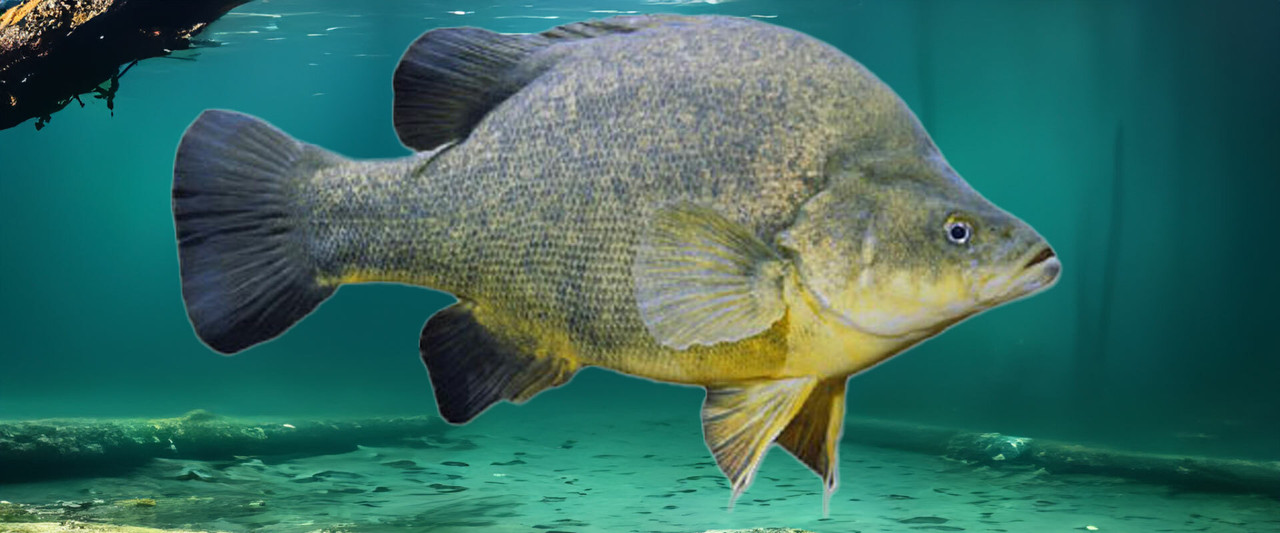
A Tackle Shop Guide to Yellowbelly Lures
Yellowbelly are calculated ambush predators that hold incredibly tight to submerged timber, rock walls, and drop-offs. Because they often live in muddy or tannin-stained water, they rely heavily on their lateral lines to feel the vibration of a lure before they see it. Catching them consistently requires tackle that displaces a lot of water to get their attention, paired with the right profile and colour to help them zero in for the strike.
A Note From Our Local Experts
"Looking at our Yellowbelly lures sales data for anglers heading inland to target Golden Perch, a very clear buying pattern emerges every season. Lipless crankbaits (vibes) are the most heavily purchased category, specifically the Jackall TN50 and TN60, alongside the Profishent Vixen Vibes. Interestingly, purple colour combinations outsell almost everything else in the vibe range.
When it comes to soft plastics, black is the clear leader. The black Berkley Gulp Minnow Grub and various black wriggler-style plastics are our fastest-moving lines. Customers constantly report back that the solid, dark outline of a black or purple lure provides the highest contrast in dirty, muddy water, making it much easier for the fish to track down."
- Ben Czulowski, Owner, Fishing Tackle Shop
Decoding Yellowbelly Lure Profiles
You need to match the lure's design to the density of the structure you are fishing.
✔
Lipless Crankbaits (Vibes): These are heavy, sinking Yellowbelly lures that emit a high-frequency vibration. Quality models like the Jackall TN and Vixen Vibe are engineered to rest nose-down, tail-up on the bottom. This keeps the treble hooks pointing upward and clear of the mud, drastically reducing snags when fishing tight to the bottom.
✔
Spinnerbaits: The 4WD of the freshwater lure world. The wire frame and upward-facing single hook are designed to physically bounce over branches and push through weed beds, allowing you to cast horizontally into heavy snags where a vibe would instantly get stuck.
✔
Soft Plastic Grubs & Wrigglers: A finesse Yellowbelly lure option for when fish are shut down. A curly-tail grub fished on a
light jig head works effectively at very slow speeds, imitating a swimming yabby or worm near the bottom.
Pro-Tips: Rigging and Mechanics
- The Headbutt Rule: Yellowbelly are known to headbutt or aggressively bump their prey to stun it before eating. If you strike at the first sharp tap you feel on the rod, you will pull the lure right out of the strike zone. Keep winding slowly and steadily until the rod physically loads up with the weight of the fish.
- How to Fish Vibes in Timber: Dragging a treble-hooked vibe horizontally through a sunken tree usually ends with the hooks burying into the wood. Instead, use your sounder to find the snag, position your boat directly over it, and drop the vibe vertically down the trunk. You can hop the lure up and down safely. If you need to cast horizontally deep into a laydown, put the vibe away and tie on a spinnerbait.
- The Spinnerbait Helicopter Drop: When casting a spinnerbait past a standing tree, don't just wind it straight back at a constant speed. Stop winding for a second right next to the trunk. The blades will helicopter and spin as the lure sinks vertically down into the roots. This sudden change in direction is a proven strike trigger for fish holding tight to the wood.
Lure Application Guide
Select your Yellowbelly lures based on the water clarity and the type of structure.
| Lure Style |
Ideal Environment |
Retrieve Technique |
| Lipless Vibe (e.g., Jackall TN) |
Deep drop-offs, open water, vertical timber |
Slow roll or vertical hopping (tea-bagging). |
| Spinnerbait |
Heavy horizontal snags, submerged laydowns |
Steady retrieve, allowing it to bump over wood. |
| Soft Plastic Grub / Wriggler |
Mud banks, rocky points, fussy fish |
Slow dragging across the bottom with slight pauses. |
Swipe →
Frequently Asked Questions About Yellowbelly Lures
Are yellowbelly and golden perch the same fish?
Yes, they are the exact same species. Golden perch is the standard accepted name, while yellowbelly is the common nickname used predominantly by anglers in NSW and Queensland. If you are fishing in South Australia, you will often hear the exact same fish referred to as callop.
Why are purple and black lures so popular for golden perch?
It comes down to visibility in dirty water. Yellowbelly inhabit many river systems that carry suspended mud or tannins. While they use vibration to locate the general area of a lure, they still need to see it to strike accurately. Dark, solid colours like black and purple block out light, creating a stark, high-contrast outline that is much easier for a fish to track than a pale or translucent colour.
What size jig head should I use for soft plastic wrigglers?
For a standard 3-inch curl tail grub, a size 1/0 hook is the sweet spot. A larger 2/0 hook is often too long and will stiffen the plastic, killing that vital tail flutter. For the weight, while 1/8oz or 1/6oz are reliable starting points, many anglers drop down to 1/12oz or even 1/20oz in slow-flowing dams. This gives the plastic a very slow, wafting fall rate, which is often when a shut-down yellowbelly will strike.
Is a baitcaster better than a spinning outfit for these lures?
It depends on the lure you are throwing. For casting spinnerbaits accurately into tight timber, a baitcaster gives you more thumb control to stop the lure right on target before it hits a branch. However, if you are dropping vibes vertically in deep water or casting light soft plastics, a standard spinning outfit is perfectly capable and often easier to manage.