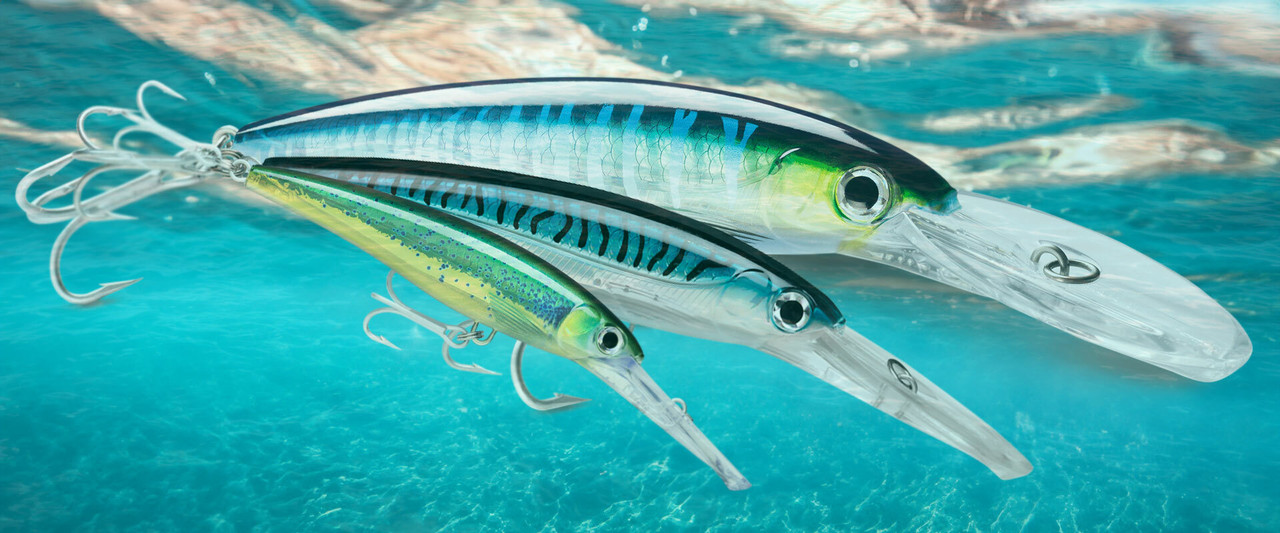
A Tackle Shop Guide to Large Diving Lures
Large diving lures earn their place in the boat or your shore-fishing pack because they reach structure or depths that smaller profiles simply cannot reach. Whether you are working a deep reef edge offshore from Shellharbour, slow-trolling a Murray Cod or Barra snag pile, or targeting kingfish along the rock ledges at Bass Point, the right large diver puts your presentation directly into the strike zone. This guide breaks down what we have learned selling, rigging, and fishing large diver lures over the past 20 years.
A Note From Our Local Experts
"The number printed on the box is a starting point, not a guarantee. I have tested many lures; some, for example, may be rated at 6 metres, which in my opinion only reach 4 in real-world fishing situations, while others rated at 4 will push past 5 on light braid with a longer set-back.
If you are buying a large diver to reach a specific depth, you need to understand the factors that affect that number. It's the difference between dragging a lure over a Kingy's head or having it sail 2 metres above them."
- Ben Czulowski, Owner, Ocean Storm Fishing Tackle | Fishing Tackle Shop
What Actually Determines Diving Depth
Every large diver lure has a rated depth, but that rating is tested under controlled conditions. Out on the water, three specific variables will change that number significantly.
- Line Diameter: This is the biggest variable. Thicker line creates more water resistance (drag). That drag creates an upward bow in the line that physically lifts the lure away from the bottom. For example, switching from 50lb braid to 30lb braid on a lure like the Halco Laser Pro 190 could potentially gain you an extra 1.5 to 2 metres of depth on the same trolling pass.
- Set-Back Distance: Set-back is how much line you have out. Most large bluewater divers need a minimum of 30–40 metres of line out before the bib geometry can pull the lure to its working depth.
- Trolling Speed: Pushing a lure past its designed speed will not make it dive deeper—it will usually cause the lure to "blow out," lose its action, and spin to the surface. Fast offshore divers are built for 7–10 knots, while Murray Cod and Barra models are often designed for a 2.5–4 knot crawl.
Application Guide: Matching Lure to Job
| Application | Target Species | Speed Range | What to Look For |
|---|
| Offshore Trolling |
Kingfish, Tuna, Snapper |
5–9 knots |
High-speed stability, through-wire construction |
| Freshwater Snags |
Murray Cod, Barramundi |
2–4 knots |
Wide rolling action, high buoyancy for stop-start retrieves |
| Rock & Land-Based |
Kingfish, Salmon, Tailor |
Not Applicable |
Casting weight 30g plus, fast dive rate to stay in the zone |
Swipe →
Upgrading Hooks: Cheap Insurance for Serious Fish
Most large divers ship with hooks that are adequate for average fish, but not for a 90cm kingfish or a metre-plus Murray Cod. Swapping factory trebles for 3X or 4X strong replacements from Owner or BKK is a smart move. Just remember: match the weight of the replacement hooks to the originals. A significantly heavier hook will kill the lure's vibration and action. Match the weight per hook position within a gram or two.
Shop Floor Tip: For lures in the 10–15cm range targeting kingfish around the Illawarra rock ledges, BKK Raptor-Z trebles in 2/0 or 3/0 are an excellent choice. Their inline point design reduces rock snags noticeably compared to standard round-bend trebles.
Rigging for Free Movement
A large diver needs to pivot freely at the tow point to generate action. If the connection is rigid, the wobble gets choked. For trolling, a quality heavy-duty snap clip (not a cheap brass swivel) is the most practical choice. For casting, always use a loop knot (like a Lefty's Loop or Rapala Knot). Never cinch a tight uni-knot directly onto a diving lure eyelet—it restricts the bib action and costs you depth.
Frequently Asked Questions
Why is my lure not reaching its rated depth?
The most likely cause is line diameter. Heavy braid creates water resistance that lifts the lure. Using thinner braid and ensuring you have at least 30-40m of line out (set-back) are the two best ways to reach the maximum depth potential of the lure.
Should I use a snap clip or tie directly to the lure?
Both work as long as the connection isn't rigid. Use a heavy-duty snap clip for trolling or a loop knot for casting. Avoid tight knots that cinch onto the eyelet as they 'choke' the lure's vibration and reduce its diving ability.
Can I use large divers for casting off the rocks?
Yes, any model 9cm+ will often have the weight for a solid cast. Be mindful of the water depth; around Illawarra ledges like Bass Point, a 3-4m rated diver is the sweet spot to avoid snagging the reef while staying in the strike zone.
What size large diving lure do I need for barra and murray cod versus offshore fish?
For large inshore species like barramundi and Murray cod, the standard range for diving minnows is typically between 8cm and 15cm, which mimics local prey like mullet or bony bream. When targeting offshore pelagics like kingfish, mackerel, or tuna, you generally step up to a larger 16cm to 20cm+ profile. These larger lures match oceanic baitfish and provide the mass needed for stability at higher trolling speeds.