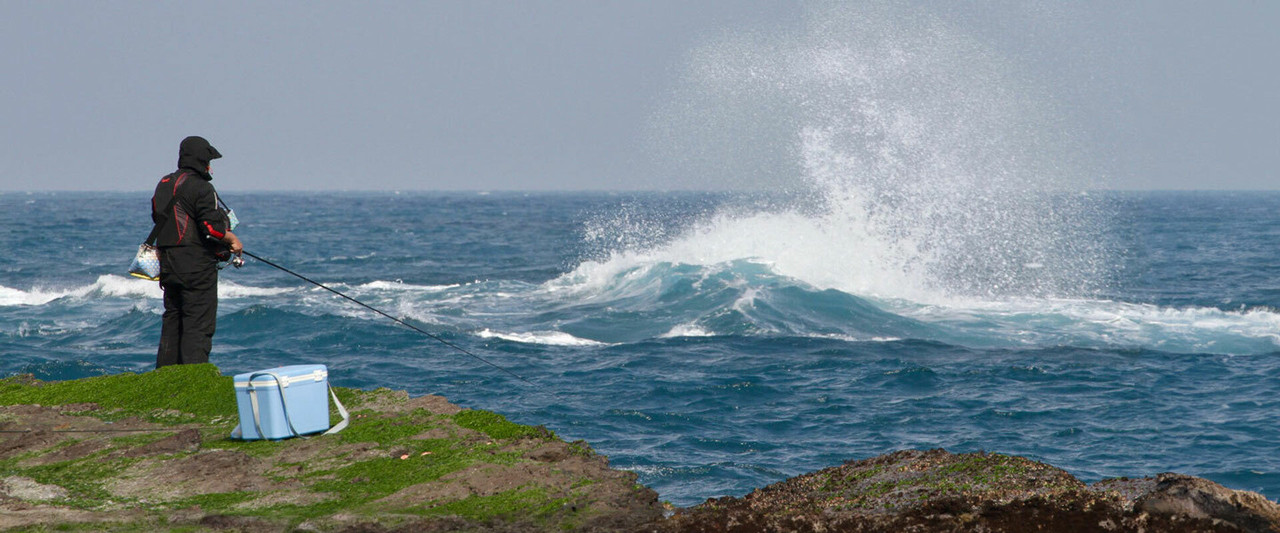
A Tackle Shop Guide to Rock Fishing Rods
Rock hopping is a tug-of-war between you, the fish, and the sharp rock ledge underneath you. A standard estuary or boat rod is a liability out rock fishing. You need a specific length of rod to hold your line out of the wash, and you need to understand the physical limitations of the rod blank you are holding. Catching fish from the rocks consistently requires matching the rod material—whether that is lightweight graphite or heavy-duty composite—directly to how you plan to land the fish.
A Note From Our Local Experts
"I do a lot of my rock fishing around the Illawarra. Places like Kiama Blowhole Point and Gerroa's Black Head are two of my most frequent spots. For spinning metals at bonito, salmon, and the occasional kingfish, I run a 10ft graphite rod with a 6000 to 10000-size spinning reel.
I've tried shorter 8ft spinning rods, and while they will cast fine, you immediately notice the difference when a fish runs along the platform edge. That extra two feet of length is what keeps the rod tip high enough to clear the basalt ledges we have here. Lose that clearance, and you're relying on leader abrasion resistance alone to keep the fish connected. On a sharp basalt ledge, that is not a risk worth taking."
— Ben Czulowski, Owner, Fishing Tackle Shop (Ocean Storm) | 20+ years industry experience
What to Look For in Rock Fishing Rods
Understanding how rock fishing rods are built explains why they handle the punishing coastal environment differently from a shorter setup.
✔
Length — clearance over casting: A 9-foot or 10-foot blank is not just for casting distance. It acts as a physical tower. When you are fighting a fish at the base of the rocks, that extra length allows you to reach out and hold your mainline safely away from the sharp, barnacle-covered ledge directly in front of you.
✔
Blank Material (Graphite vs. Composite): Modern graphite rock fishing rods are highly rigid and incredibly light, making them the standard choice for casting metal lures all morning without burning out your shoulders. However, they are brittle under extreme lifting angles. Composite or fibreglass blanks are physically heavier, but their structural flexibility allows them to survive the bumps and aggressive high-angle lifts required when bait fishing in the wash.
✔
Heavy Butt Section (Lifting Power): Rock rods typically feature a very stiff lower third (the butt section). This provides the mechanical leverage you need to physically steer a hard-running fish, like a drummer or kingfish, away from a submerged cave or kelp bed before it cuts your line.
Pro-Tips: Handling Rock Fishing Rods on the Ledges
- Avoid High-Sticking: When a fish is at your feet, never lift the rod past a 90-degree angle to the water (pointing it at the sky). This transfers the entire weight of the fish onto the fragile tip section, which is the fastest way to snap a graphite blank. Keep the rod low and use the rod's thicker mid-section to take the strain.
- Use the Swell: Do not try to dead-lift a heavy fish out of the water using just the rod. Wait for an incoming wave or surge, and use the momentum of the water to slide the fish up a ramp or onto a safe ledge.
- Check for Fractures: If you accidentally drop your graphite rod or bang it hard against a rock, run your fingers over the blank. Micro-fractures in the carbon will often cause the rod to explode later when placed under load during a cast or a fight.
Rock Fishing Rod Application & Setup Guide
Match the rod material and length to the specific style of fishing you are doing.
| Target Environment / Style |
Rod Specs (Length & Power) |
Recommended Blank Material |
Common Target Species |
| Bait Fishing the Wash |
9ft to 10ft (Heavy: 8-15kg) |
Fibreglass Composite (Heavy Duty) |
Drummer, Snapper, Groper |
| Active Shore Spinning |
9ft to 10ft (Medium: 5-10kg) |
Graphite (Lightweight & Fast Action) |
Tailor, Salmon, Bonito, Kingfish |
| Float Fishing (Light Wash) |
10ft+ (Light: 3-6kg) |
Graphite / Composite (Slow Action) |
Luderick (Blackfish), Silver Trevally |
Swipe →
Frequently Asked Questions
Can I just use a 12-foot surf rod on the rocks to get even more line clearance?
While a 12-foot rod gives you massive clearance, that extra length becomes a severe liability once you hook a heavy fish. A rod acts as a lever. On a rock platform, a 12-foot surf rod gives a powerful fish like a kingfish too much leverage against your arms and lower back. A dedicated 9 or 10-foot rock rod is kept deliberately shorter to flip that mechanical advantage back in your favour, allowing you to physically steer the fish away from the ledge.
What size reel balances best on a 9 or 10-foot rock rod?
A long rod can feel incredibly tip-heavy if you pair it with a small reel, which will burn your wrist out after an hour of casting. For a 9 to 10-foot rock rod, a 6000 to 10000 size spinning reel is the practical sweet spot. That physical weight at the bottom of the rod balances the long blank perfectly, and the larger spool gives you the line capacity required when a pelagic fish makes a long run offshore.
Can I use the same rock rod for catching luderick and drummer?
Fishing for luderick in the wash requires a very long, highly flexible, 'soft' rod. If you use a stiff rod, you will tear the tiny hooks straight out of their soft mouths. Drummer, however, are brutal fighters that live in the reef. Targeting them requires a rod with a stiff, heavy butt section to physically lock the drag and stop them from burying you in the kelp. Trying to use one rod for both usually ends in lost fish.
How long should my leader be when spinning from the rocks?
This comes down to the mechanical relationship between rod length and leader length. If you use a shorter 9ft rod on a high ledge, your line angle to the water is very steep. This brings your vulnerable braided mainline dangerously close to the reef edge. To counter this, you must run a much longer (2 to 3 metre) heavy fluorocarbon leader to act as a physical buffer against the rocks during the final stages of landing the fish.
Are two-piece rock fishing rods weaker than one-piece blanks?
Rock fishing involves a lot of walking across rough, uneven headlands, which makes carrying a single-piece 10ft rod incredibly awkward and dangerous. Modern two-piece rock fishing rods use advanced carbon ferrule joints that actually reinforce the connection point. You give up practically zero lifting power compared to a one-piece blank, but you gain the ability to break the rod down and transport it safely across the rocks without snapping the tip in a car door or on a cliff face.