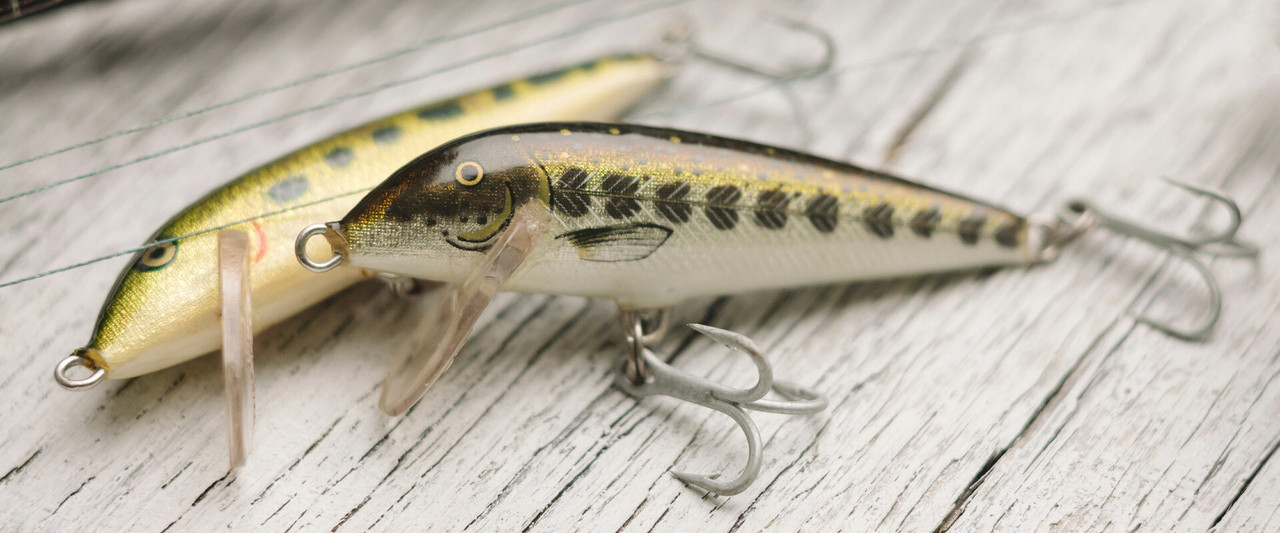
A Tackle Shop Guide to Small Diving Lures
Small diving lures are often an excellent choice when fish are playing hard to get, or the water is crystal clear. Unlike sinking soft plastic lures rigged on a jig head that require constant movement, a bibbed diver allows you to work a specific depth with a lot more control. This guide breaks down the technical differences between profiles and buoyancies so you can pick the right 'small diver' for your local fishery.
A Note From Our Local Experts
"I’ll be one of the first to admit that a hard body lure and snag are usually a recipe for a bad mood—I’ve personally snagged and lost more hard bodies than any other style of fishing lure in my kit. However, with that said, when the fish are a little shut down, I’ll often pop on a small hard body as I personally find they get more reaction bites than any other lure I fish.
In our local waters, like the Minnamurra River or the shallow flats of Lake Illawarra, finesse is one of the best ways to go on those bright, still days. When a fish is sitting tight in structure and ignoring soft plastics, the aggressive vibration and 'shimmer' of a tiny bibbed lure can literally force them into an instinctive strike. It’s about annoying the fish into biting, rather than just feeding them. Some of my favourites are the Jackall Chubby and also the range of Rapala minnows."
- Ben Czulowski, Owner, Fishing Tackle Shop (Ocean Storm)
Minnows vs. Crankbaits: Choosing Your Vibration
This category is dominated by two distinct shapes, each designed to trigger a different feeding response. Choosing between them depends on how aggressive you need the lure to be.
- Minnow Profiles: These are slender and realistic. They are designed for a subtle, tight 'shimmer' on a straight retrieve or an erratic darting motion when twitched. They are the best choice for clear water and highly pressured fish that are easily spooked.
- Crankbait Profiles: These are short, fat, and rounded fishing lures. They have a much wider, more aggressive wobble that sends out a lot of vibration. These are highly effective 'reaction' small hard body lures for triggering strikes from aggressive fish like Australian bass or estuary perch that need to be "woken up."
Understanding Buoyancy (Floating vs. Suspending)
In small hard diving lures, buoyancy is as important as the bib size. It dictates what the lure does during the most critical part of the retrieve: the pause.
✔
Floating Small Diving Lures: These remain on the surface and dive as you reel in. While they are still prone to snagging, you can often "back them out" of structure by stopping the wind the moment you feel a bump, letting the lure float up and away from the underwater obstacle.
✔
Suspending Divers: When you stop winding, these lures hang dead in the water column. This is often what it takes to fool a wary fish that is following the lure but isn't quite ready to commit. Leaving a suspending small diving lure in a fish's face for 5-10 seconds is often a strike trigger.
Pro-Tip: Don't "Choke" Your Lure with Heavy Leader
Small diving lures have very precise actions that can be easily disrupted by heavy leader line. If you use a leader that is too thick (e.g., 15 lb+), the line's stiffness can prevent the lure from vibrating properly. For diving lures and other small hard bodies under 50mm, a fluorocarbon leader between 4lb and 8lb is the sweet spot to ensure the lure swims exactly as the manufacturer intended. Some of my favourite leader brands are Sunline FC Rock and Daiwa.
Frequently Asked Questions
Why do small diving lures work better than plastics when fish are shut down?
It’s all about the 'reaction bite.' While soft plastics often rely on a fish wanting to eat, the hard, rhythmic vibration and internal rattles of a diving lure can trigger a predatory instinct. It provokes a strike based on aggression or curiosity rather than hunger, which is often the only way to get a result in high-pressure areas that are often overfished like Sydney, Brisbane and other metro areas that are densely populated.
Will upgrading the hooks on a small diving lure ruin its action?
It can. Small lures are perfectly balanced. If you replace the stock trebles with hooks that are significantly heavier, you can turn a 'floating' lure into a 'sinking' one, or kill the vibration entirely. If you must upgrade, use a 'fine wire' high-strength model treble hook like an Owner ST-36 to keep the weight as close to the original as possible.
Should I use a snap clip or tie my leader directly to a small diving lure?
For small diving lures, we strongly recommend using a high-quality snap clip or a loop knot. Because these lures are so light, a standard tight knot can 'choke' the action and stop the lure from vibrating correctly. A clip or loop knot allows the lure to pivot freely at the tow point, which is essential for maintaining that high-frequency vibration that triggers reaction bites.
Looking for bibless 'vibes' or metal blades?
You've noticed that this category is mostly focused on bibbed divers. If you're looking for our range of sinking metal blades and lipless vibes, you can find them in our dedicated Blade and Vibe Lures category.