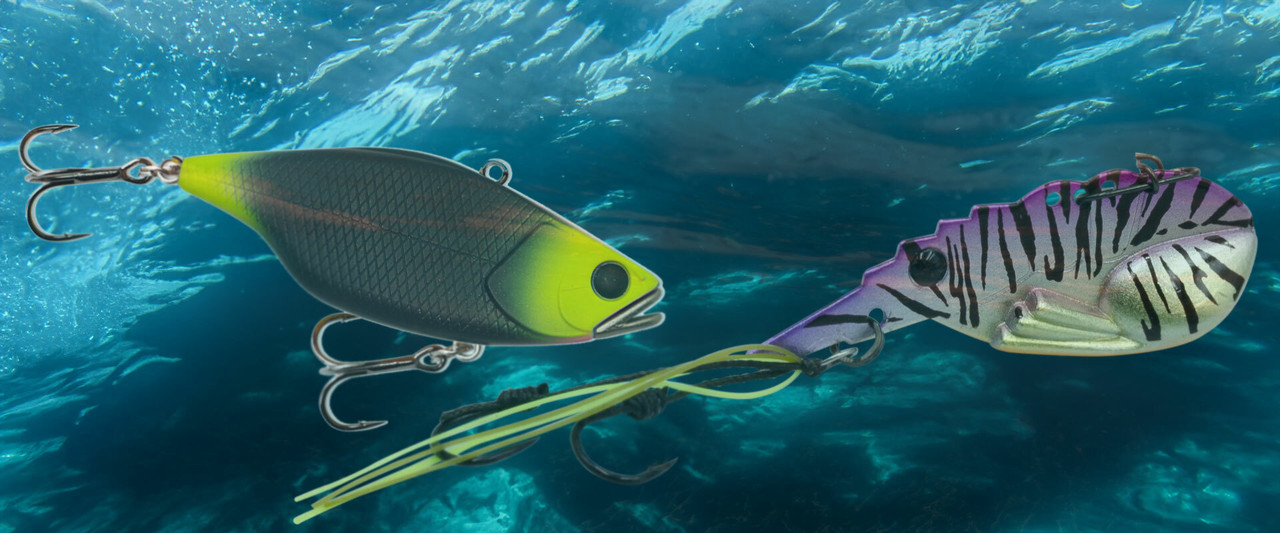
A Tackle Shop Guide to Blade & Vibe Lures
In the world of lure fishing, "vibe" is a broad term that covers a lot of territory. This category is where you find the most aggressive vibration lures we sell on the market. Unlike bibbed minnows that rely on water pressure against a plastic lip, these lures use a weighted head in most models and a balanced tow point to create a frantic, pulsing action. This guide breaks down the technical differences between metal blades and bibless vibes to help you choose the right models for your local waters.
A Note From Our Local Experts
"When a customer comes into the shop and asks me how to get a bite when the fish are shut down, I usually walk them straight to the blades and vibes. I fish blades a lot! They are one of my favourite lures, especially in the Shoalhaven River, Lake Illawarra, and St George's Basin for targeting flathead. You can literally feel every single pulse of the lure through the rod tip. Maybe that’s why I like them so much, but they produce results!
The biggest mistake I see is anglers being too aggressive when using blades and vibes. You don't need to rip these lures; you just need to feel that 'shiver' on the rod tip. If you're chasing bigger fish like yellowbelly or large flathead, switching to a larger 'bibless minnow' or TPE vibe is often a better way to go. These lures have a deeper, more resonant 'thump' that appears to attract larger predators from greater distances. It’s all about matching the vibration to the aggression of the fish."
- Ben Czulowski, Owner, Fishing Tackle Shop (Ocean Storm)
Blades vs. Vibes: Understanding the Hardware
While both lures rely on vibration, they use different materials and profiles to achieve their action. Choosing between them depends on depth and current.
- Metal Blade Lures: These are thin, flat slices of metal (usually stainless steel or brass) with a lead-weighted nose. Because they are so thin, they have very little water resistance, allowing them to sink fast and vibrate at an incredibly high frequency. They are the premier choice for deep river holes and fast-moving tides for chasing fish species such as bream and flathead.
- Vibe Lures (Bibless Minnows): These feature a more traditional "fish" profile but without a bib. They can be made of hard plastic or soft, stretchy TPE material. Because they have more body mass, they produce a slower, deeper vibration compared to a blade. These are excellent "search baits" for covering ground in estuaries and lakes.
Technical Focus: The Pivot Point Advantage
To get the maximum vibration out of a blade or vibe, the lure needs to pivot freely. This is a critical technical detail often overlooked by beginners.
✔
Always Use a Snap Clip: Most blades come with a small snap clip for a reason. Tying a tight knot directly to the tow point "chokes" the vibration. If you prefer not to use a clip, you must use a loop knot (like the Lefty's Loop) to allow the lure to swing freely and reach its full pulsing potential.
Pro-Tips for Fishing Vibration Lures
- The "Assist Hook" Upgrade: If you find you are constantly snagging your metal blades on the bottom, try swapping the rear treble for a set of small assist hooks (stinger hooks). These trail behind the lure and are less likely to grab rocks than a rigid treble, while still providing an excellent hook-up rate on fussy feeders like bream and whiting.
- Vary Your Leader: For finesse work with small blades, a light fluorocarbon leader (4lb to 8lb) is a great choice for bite detection. If you are throwing larger vibes for jewfish or barra, step up to a monofilament leader for the added shock absorption during a violent strike.
- Wait for the Drop: 90% of strikes on a blade or vibe occur as the lure is falling back to the bottom. Keep a semi-tight line on the drop; if you see your line "twitch" or jump, set the hook immediately.
Frequently Asked Questions
What is a bibless minnow, and is it different from a vibe?
In most cases, they are the same thing. A "bibless minnow" is simply another name for a lipless vibration lure. The term is often used to describe hard-bodied vibes that have a more realistic baitfish profile compared to the flat, thin design of a metal blade.
Can I fish blade lures in shallow water?
Yes, but you need to change your retrieve. Instead of long, vertical hops, use short, sharp twitches and a faster reel speed. This keeps the blade from burying into the sand or weed while still generating the vibration needed to trigger a strike.
Why do some vibes have multiple holes on the back?
These are different tow points that change the lure's action. Using the hole closest to the front will give the lure a tighter, faster vibration (better for fast retrieves). Using the hole further back will make the lure sit more vertically and provide a wider, harder thump (better for slow jigging in deep water).
Why do fish seem to "throw" vibe lures so easily?
It comes down to leverage. Because vibe lures are dense and heavy for their size, they act like a pendulum when a fish shakes its head or jumps. This weight swings around and can dislodge the small hooks. The pro-tip is to keep your rod tip low to stop the fish from jumping and consider swapping stiff trebles for "assist hooks," which are flexible and harder for the fish to shake out.