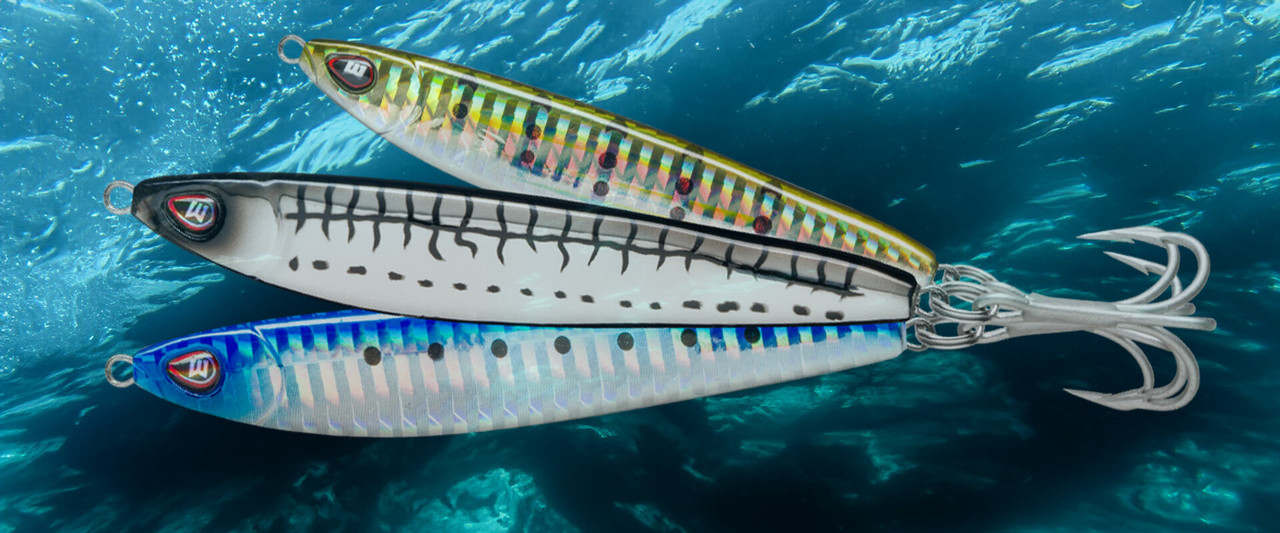
A Tackle Shop Guide to Metal Spinning Lures
Don’t stop at one. As far as most anglers are concerned, you can never have too many metal spinners on hand when a school of salmon or tailor swims past. Like the old boy scout motto states: "Be Prepared." This guide breaks down the technical application of metal lures to help you choose the right weight and profile for Australian conditions.
A Note From Our Local Experts
"I often tell customers that metal lures are like rice to the Asians or pasta to the Italians—they are the essential staple every angler needs if lure fishing from the rocks or the beach. There’s nothing quite like the distance a metal spinner delivers. When a school of salmon or tailor is breaking just out of reach of hardbodies or plastics, the metal slug is the best option to get you into or close to the zone.
I’ve spent years spinning the rocks around the Illawarra, like Kiama Blowhole Point and Black Head at Gerroa, as well as the gutters at Bombo Beach. My go-to size is 40 grams, and our sales data also consistently shows that 40 grams is the 'happy medium' size and our best-selling weight. It’s heavy enough to punch through a headwind but small enough to match the typical whitebait and pilchards our local fish are feeding on.
However, I always recommend carrying a variety; if you don't match the size of the prey on the day, you could be turning a fishing session into a missed opportunity. So, when you buy from us, buy a range from light 10g through to heavy 85g and cover all your bases."
- Ben Czulowski, Owner, Fishing Tackle Shop (Ocean Storm)
How to Use Metal Spinning Lures Effectively
There is a specific technique to getting the most out of a metal slice. Generally, it is best to let the lure sink for only a few seconds, point your rod tip directly at the lure, and start a rapid retrieve. If you have access to a high-speed gear ratio fishing reel, this will provide the optimal performance needed to trigger an instinctive strike.
Rock and Beach Application
- The Rock Ledges: Be attentive to bird action. If birds are diving, there is a high chance predatory fish are nearby. Cast around the school or push a long cast to work as much area as possible through the wash.
- The Beach Gutters: Focus on turbulent zones or deep gutters where salmon and tailor lurk, awaiting meals displaced by the wash. For the best results, fish an incoming tide close to high, through to the upper part of the runout.
Offshore Trolling and Freshwater
- Bluewater Trolling: Metal lures are not just for the shore. They troll exceptionally well for mackerel, wahoo, mahi-mahi, and tuna. Their weight ensures they stay stable even at higher speeds. Metal spinning lures are actually one of my favourite lures to troll in close with the Halco Twisty and Surecatch Knight among the top two that I will toss out behind the boat.
- Freshwater Finesse: While traditionally a saltwater fishing lure, small metal lures (under 10g) work brilliantly for trout in rivers and dams, mimicking small minnows or fry with a distinct flash and flutter.
Technical Focus: Matching the Hatch and Hardware
✔
Weight vs. Wind: Metal lures are the best choice for cutting through wind resistance. Use a heavier 65g-85g slice when the wind is in your face to maintain your casting distance.
✔
Inline Hook Upgrades: Many modern anglers now replace the rear treble with a single
inline single hook. This reduces the chance of the fish throwing the lure during a jump (leverage) and makes unhooking safer and faster.
Frequently Asked Questions
What is the best weight for general saltwater spinning?
While we stock lures from 10g up to 85g+, 40 grams is widely considered the ideal all-rounder for Australian estuaries, beaches, and rocks. It provides a great balance of casting distance and a profile that matches common baitfish like blue bait and pilchards.
Why is a high-speed reel recommended for metal lures?
Predators like tailor, salmon, and kingfish often respond to speed. A metal lure has its best action when it's skip-flicking or vibrating rapidly. A high-speed reel (6.0:1 ratio or higher) allows you to maintain that pace without excessive effort, which is essential for species like salmon and tailor.
Do metal lures work for freshwater trout?
Yes. In smaller sizes (3g to 10g), metal spinners are highly effective in freshwater. They provide a unique flash and vibration that trout find hard to ignore, especially in flowing water where the current helps the lure flutter and dance.
How do I prevent my metal lures from rusting in the tackle box?
Saltwater is the enemy. Always give your used metal lures a quick rinse in fresh water and let them dry completely before putting them back in your tackle box. A single salty lure can cause an entire tray of hooks and lures to rust if left in a sealed container.