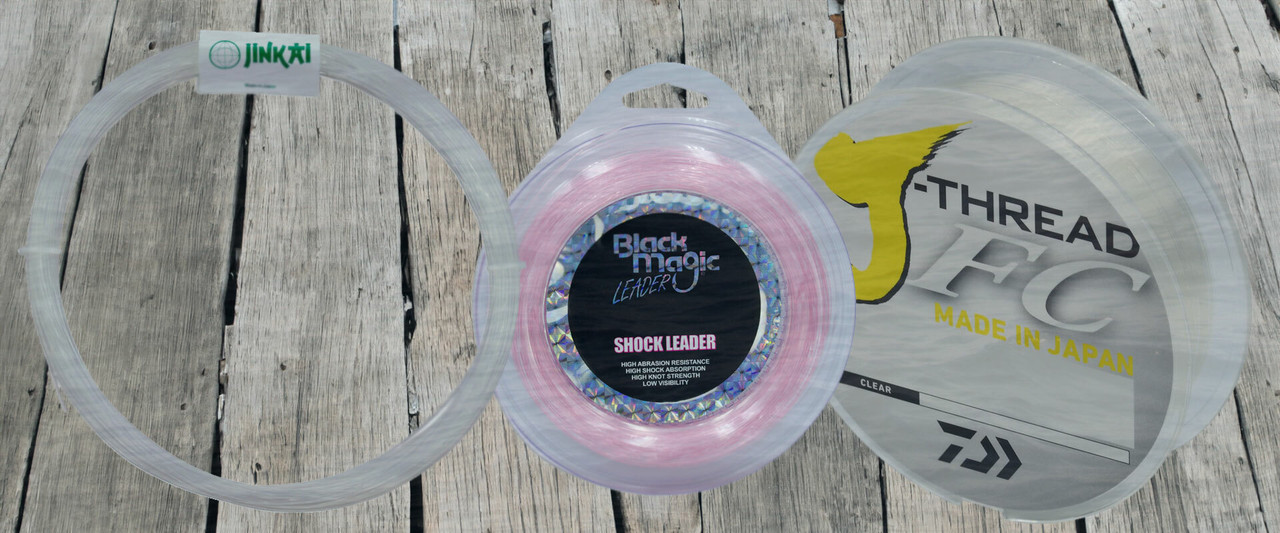
A Tackle Shop Guide to Leader & Trace Lines
Once you move beyond a simple monofilament setup, choosing the right leader material becomes a critical decision. It's a game of trade-offs, balancing the stealth of fluorocarbon against the shock absorption of monofilament. This guide will break down the real-world differences to help you make the smarter choice for your fishing style.
A Note From Our Local Experts
"I do a lot of inshore fishing, and that means constantly dealing with structure—oyster racks for bream, submerged trees for Australian bass, and rough bottom for flathead. For this kind of work, your leader is everything. To cover a wide range of situations, I find that a 10lb leader is the sweet spot for fishing our local spots like Lake Illawarra and the Shoalhaven River.
I have a preference for Daiwa J-Thread FC and Sunline FC Rock, but I've used many brands over the years, including Shimano and Seaguar. For sheer value for money, the Daiwa J-Thread and FC Rock are very hard to beat."
- Ben Czulowski, Owner, Fishing Tackle Shop (Ocean Storm)
The Big Debate: Fluorocarbon Leader vs. Tough Mono Trace
The choice between these two materials comes down to three key factors: visibility, abrasion resistance, and stretch.
✔
Fluorocarbon Leader: The Stealth Option. Fluorocarbon has a refractive index very close to that of water, making it nearly invisible once submerged. It's also a much harder, denser material than mono, which gives it superior abrasion resistance against sharp objects like reef and oyster shells. Its low stretch provides excellent sensitivity.
✔
Monofilament Trace: The Shock Absorber. A high-quality "tough" monofilament trace offers two key advantages. Firstly, it has more stretch than fluorocarbon, which acts as a shock absorber during a fight and can be more forgiving. Secondly, it generally has better knot strength and is more supple, making it easier to manage, especially in heavier line classes.
Pro-Tips for Using Leader Lines
- Go Lighter for Finesse: When targeting extremely wary fish in clear, shallow water, dropping your leader size down from 10lb to 6lb or even 4lb can be the difference between getting bites and getting nothing.
- Regularly Check for Damage: After every fish, and after every few casts over rough ground, always run the last metre of your leader between your thumb and forefinger. If you feel any rough patches, nicks, or cuts, cut it off and re-tie immediately. A damaged leader is a weak leader.
- Wet Your Knots: This is especially critical for fluorocarbon. Always lubricate your knot with saliva before pulling it tight. This prevents friction from burning and weakening the line, ensuring you get the maximum possible knot strength.
Frequently Asked Questions
Is the "invisibility" of fluorocarbon a real advantage, or just marketing?
It is a genuine and significant advantage, especially when fishing in clear water for species with good eyesight like bream and trout. In these situations, the near-invisibility of a fluorocarbon leader will result in substantially more bites than a more visible monofilament leader of the same diameter.
Which leader is actually tougher for fishing around rocks and reef?
This is a great question. While both are good, they excel in different ways. A hard fluorocarbon leader offers the best resistance to being cut or nicked by sharp objects like oyster shells and reef edges. A tough monofilament trace, because of its softness and stretch, can sometimes be more durable when being rubbed repeatedly over smoother, abrasive surfaces like rocks.
I struggle to tie knots in heavy, stiff fluorocarbon. Are there any tips?
This is a very common problem. The key is to pull the knot up slowly and evenly, ensuring you lubricate it well to prevent friction burn. Avoid pulling the knot tight with a single, aggressive jerk. If you're still struggling, a high-quality, supple monofilament trace is often a much easier-to-manage alternative for heavier leader classes.
How do I choose the right leader strength for lure fishing versus bait fishing?
For lure fishing, anglers often use the lightest leader they can get away with to maximize the lure's action and to be as stealthy as possible. For bait fishing, because the presentation is less about action and more about scent, anglers can often use a slightly heavier and tougher leader for extra security against abrasion and big fish.