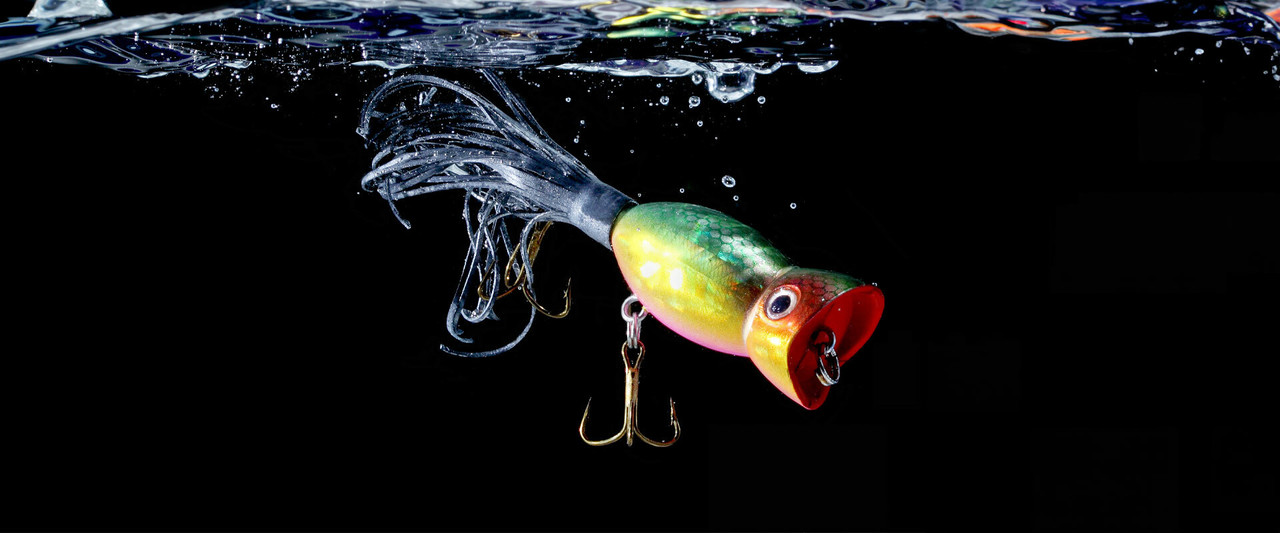
A Tackle Shop Guide to Finesse Surface Fishing
Surface fishing in our Australian estuaries and rivers can be more than just a visual strike; it’s about understanding the "strike window." To a predator such as an Australian bass or bream, the surface is a horizontal wall that traps prey. This guide breaks down the general technical details of small-surface lure action and rigging that could differentiate a "looker" from a "biter" in inshore waters.
A Note From Our Local Experts
"Over my years of chatting with customers in the store, combined with my own hands-on fishing experience, I have come across anglers who struggle with missed strikes when fishing surface lures. It's likely because they're treating all species the same. I've spent years on the Minnamurra River and the Shoalhaven chasing bass on small surface lures, and the biggest lesson is that sometimes 'less is almost always more.' For bass and bream, the pause is what often kills them—letting the ripples settle often triggers the explosive boof we all troth over.
On the other end of the spectrum, if you're fishing the inshore sand flats at Windang chasing whiting, it's the total opposite technique that is required. If you stop that lure for even a second, the whiting will most likely turn away. You need to keep a small stickbait or popper lure 'panicking' across the surface with no breaks. Understanding that species-specific psychology when using small surface lures is the difference between a less-than-productive morning and a smartphone full of brag mat-worthy fish pictures."
- Ben Czulowski, Owner, Fishing Tackle Shop (Ocean Storm)
Technical Actions: Walkers vs. Poppers vs. Prawns
The geometry of the lure's face determines how much water it displaces and the frequency of its vibration. Matching this to the water's surface condition can be beneficial to your fishing experience when using small surface lures.
- Stickbaits & Walkers: Featuring a tapered, aerodynamic nose, lures like the Bassday Sugapen are designed to zig-zag (the 'walk-the-dog' action). This is a subtle, high-finesse presentation and an excellent choice for fussy bream and perch in dead-flat, clear conditions.
- Micro Poppers: With a small cupped face, these create a 'bloop' and spit water forward. They are excellent for calling fish out of deeper structure or for use in a light wind-chop where a subtle walker might get lost in the ripples.
- Surface Prawns: Specifically weighted to mimic the backward-flicking motion of a fleeing crustacean. These are the benchmark for whiting fishing, designed to be skittered across the surface to mimic a prawn in distress.
Acoustics: Silent vs. Rattling Lures
A detail often overlooked in-store is the internal sound of the lure. Breaking the "conditioning" of fish is key to success:
- Rattling Lures: These feature internal steel or glass beads. They are highly effective in "textured" water (wind chop) or low-light conditions, helping fish locate the lure through noise and pulses.
- Silent Lures: In dead-calm, "greasy" water or heavily fished areas, a loud rattle can be a deterrent. A silent walker or stickbait relies purely on its visual appearance and surface displacement, making it the superior "stealth" choice for big, educated bream that have seen plenty of lures.
Technical Focus: The "Buoyancy Conflict" in Leaders
This is one of the most common technical errors an angler can make. Most lure anglers use high-quality fluorocarbon leaders because they're invisible. However, fluorocarbon is dense and often sinks. On a small, light surface lure, a sinking leader may physically pull the nose of the lure down into the surface film.
✔
The Pro's Choice: Test your lures and if you find that the action of the lure is less than ideal, use a high-quality
monofilament leader or a specialised "floating" leader for surface work instead. Mono is more buoyant; it sits on the surface and allows the lure to pivot freely, ensuring it maintains its intended side-to-side swing without "ploughing" under.
Pro-Tips for Topwater Success
- Rod Angle Mastery: Keep your rod tip low (pointing towards the water) to achieve a tight, consistent "walk-the-dog" action. Conversely, if you are skip-flicking a prawn lure for whiting, keep the rod tip high (at 10 o'clock) to help the lure "skitter" and "spit" across the surface.
- The "Assist Hook" Upgrade: Whiting are notorious for "nipping" at the tail of a surface lure. If you are missing hook-ups, swap your rear treble for a pair of small assist hooks (twin singles on short braids). They are often much easier for the fish to inhale during a high-speed retrieve.
- Wait for the Weight: The golden rule of surface fishing is: do not strike when you see the splash. If you strike visually, you will pull the lure away. Wait until you actually 'feel' the weight of the fish on your rod before you lean into the hookset.
Frequently Asked Questions
Why are fish following my small surface lure but not striking?
This usually means your retrieve is too predictable or your leader is too heavy. Try adding a longer pause (for bream/bass) or increasing the speed (for whiting). If that fails, check your leader; a sinking fluorocarbon leader might be "choking" the lure's natural vibration.
What is the best colour for inshore topwater fishing in lakes and rivers?
Since the fish is looking up against the sky, they primarily see a silhouette. Translucent or "ghost" patterns are best for bright, sunny days. However, on overcast days or in very low light, a solid black or dark purple lure has the ability to provide a sharper, most visible silhouette for the fish to target.
Will my hooks bend on a better-than-average fish?
Finesse lures that we sell often come with fine-wire trebles to ensure easy penetration on light tackle. However, these can bend if you use too much drag. If you are regularly hooked into "by-catch" like large flathead or salmon, we recommend upgrading to a high-strength, fine-wire treble like an Owner ST-36 or BKK Finesse to maintain the lure's action while gaining a bit more strength that these brands often have a reputation for.
Can I catch whiting on small surface lures in deep water?
Generally, whiting surface fishing is most effective in water under 1.5 metres deep. Once the water gets deeper, it becomes harder for the whiting to spot the lure's silhouette against the sky. For deeper estuaries, a sinking vibe is usually a more productive choice.