A Tackle Shop Guide to Marlin Lures
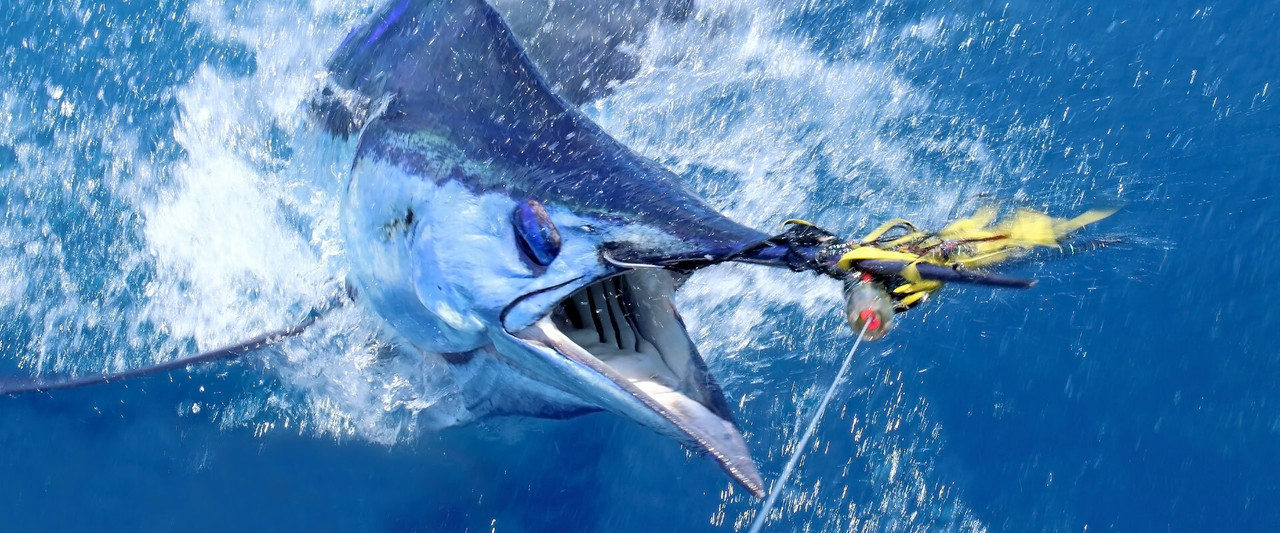
Building an effective marlin spread is a strategic process. You are attempting to create the illusion of a panicked school of baitfish behind your boat using a mix of vibrations, splashes, and silhouettes. Understanding how different skirted lure head shapes interact with the water and where they belong in your wake is the foundation of offshore success. This guide breaks down the mechanics of marlin lure selection.
A Note From Our Local Experts
"While my core passion has always been inshore and saltwater sportfishing, we have a very solid base of Illawarra game fishing customers who are always in the shop chatting about their offshore trips. One of the biggest lessons I've learned from them over the last 20 years is that there isn't much point in just running a single marlin lure out the back of the boat. You really need to build a complete spread for the most effective approach.
When we look at our real-world sales data, our most popular skirted lure brands for building these spreads are consistently Pakula and Fat Boy. Another incredibly consistent trend we see from experienced game anglers is that they almost always run a 'lumo' (luminous) skirt somewhere in their pattern, regardless of the time of day."
- Ben Czulowski, Owner, Fishing Tackle Shop
Decoding Skirted Lure Shapes and Positions
The head shape of the lure dictates how much water it pushes and how erratically it swims. This directly determines where it should be placed in your trolling spread to prevent tangles and maximise strikes.
✔
Cup Face (Pushers): These feature a deeply concave face designed to grab air and pull it underwater, creating a massive bubble trail (smoke) and a loud surface splash. Because they create significant drag, they are run short and close to the boat on the "short corner" where the tow angle is steepest.
✔
Slant Head: The angled face causes these lures to dive, dart side-to-side, and then pop back to the surface to breathe. This erratic, unpredictable action is a major strike trigger. They are highly adaptable but excel in the middle of the spread on the "long corner" or "short rigger" positions.
✔
Bullet Head: These are streamlined and heavy for their size. They do not splash or pop aggressively; instead, they track straight and sub-surface with a tight shimmy. Because they handle high speeds and long set-backs without blowing out of the water, they are the standard choice for the "shotgun" line furthest out the back.
Rigging for a Straight Swim
A skirted lure will only perform correctly if it is rigged to track straight. If your lure is spinning, it will tangle your leader and deter fish. The key is "keeling" the lure. Modern offshore anglers achieve this by using a stiff rig (where the hook is held rigid in the skirt using heat shrink tubing) and ensuring the hook point is locked in an upright position. This weight distribution acts as a keel, keeping the lure upright and "smoking" perfectly.
Frequently Asked Questions
Can I use hardbody trolling lures like the Rapala X-Rap Magnum or Halco Laser Pro for Marlin?
Yes, and many experienced crews run a hardbody in one of the flat line positions within a skirted spread. While skirted lures are the core of marlin fishing, a deep diver serves as a 'decoy' to protect expensive skirts from wahoo damage. As a bonus, these lures frequently pick up black marlin, sailfish, and mahi mahi that are sitting deeper in the water column and ignoring surface commotion.
What leader strength is generally recommended for skirted Marlin lures?
This depends on the fish size, but for general Australian Marlin fishing, leader material between 150lb and 400lb is standard. The heavy gauge isn't just for the weight of the fish; it provides the essential abrasion resistance needed to survive the rough, sandpaper-like bill of a Marlin during a long fight.
Is it better to run a single hook or a double hook rig in a Marlin lure?
The trend has shifted heavily toward single-hook rigs. A single J-hook often allows the lure to swim with a better, more natural action and results in a more secure hook-up in the jaw hinge. Crucially, single hooks are much safer for both the angler and the fish during the release process compared to complex double-hook rigs.
How do I store my skirted lures after a session to ensure they last?
Proper maintenance is key to longevity. Always rinse your skirted lures in fresh water after use to prevent salt crystals from damaging the silicone skirts or hooks. Dry them completely before placing them in a breathable lure roll. Storing them while damp in a sealed plastic bag is a fast way to encourage mould and ruin the material.