A Tackle Shop Guide to Aqua Shoes & Fishing Footwear
A fast way to ruin a fishing trip is wearing the wrong footwear. Standard joggers act like sponges — they get heavy, rot in the saltwater, and offer poor traction on a wet boat ramp. On the flip side, walking barefoot on a sand flat is a quick ticket to a sliced foot from a buried oyster shell. Getting the right footwear is about matching the sole of the shoe to the surface you are standing on, whether that is a slippery rock platform, a fibreglass boat deck, a sandy tidal pool, or a wet pool surround.
A Note From Our Local Experts
"We sell both Aqua shoes and rock boots in our store and one of the most frequent things I often observe is anglers wearing or trying to buy soft-soled aqua shoes for ocean rock fishing. They think because they are 'water shoes' they will work everywhere. I've fished the rock platforms at the Kiama Blowhole for years, and a rubber sole is still often useless on wet green algae — you may still go in.
If you are on the rocks, you should have metal spikes for more grip. I highly recommend Adrenalin spiked rock boots for that exact reason. We keep the soft aqua shoes and neoprene socks that are better for anglers walking the sand flats, customers doing aqua aerobics, and families taking the kids down to the reef pools where you just need a little added protection from sharp shells and a bit of basic grip in aquatic situations."
- Ben Czulowski, Owner, Fishing Tackle Shop
Decoding Water Footwear: Matching the Sole to the Surface
When it comes to water shoes, the sole dictates where the shoe can ideally be used.
✔
Spiked Rock Boots — Ocean Rocks & Breakwalls: Built with heavy-duty rubber soles embedded with hardened steel cleats. These spikes physically punch through the layer of slime and algae on ocean rocks to grip the hard surface beneath. They are mandatory safety gear for rock fishing and should not be confused with any other category of water footwear.
✔
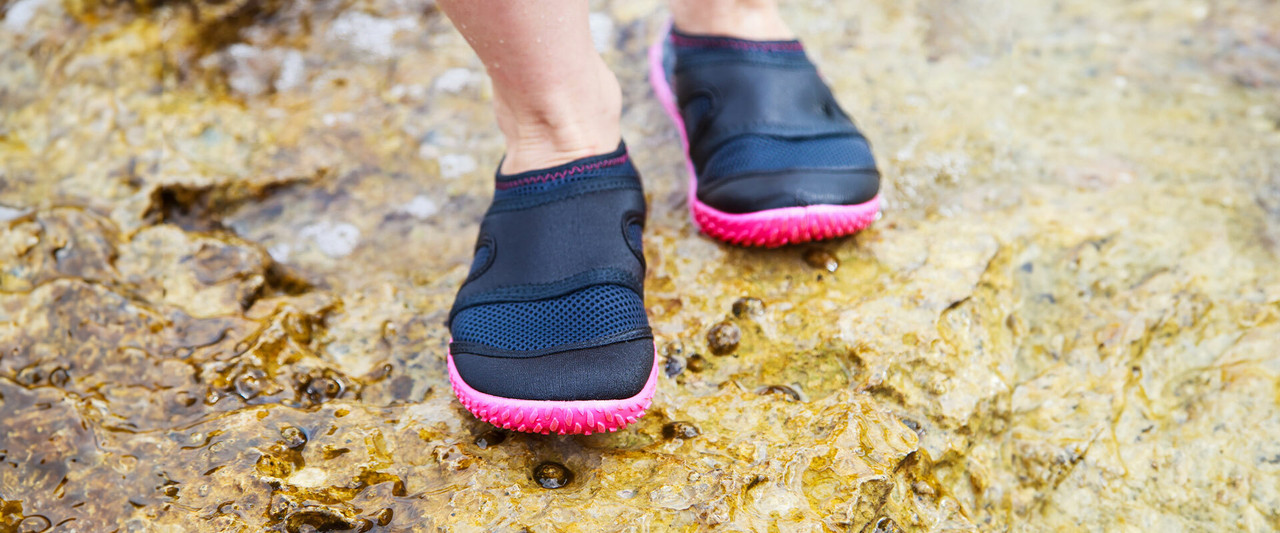
Aqua Shoes (Reef Walkers) — Beach, Flats, Rock Pools & Pool Use: A flexible, enclosed rubber sole that protects against cuts from coral, oyster shells, and objects hidden in the sand. They drain water instantly and are a standard choice for beach walking, wading the flats, and family trips to rock pools. Their non-slip rubber sole also makes them a popular choice for aqua aerobics and pool-side use, where grip on wet tiles and comfort during extended movement are the priority.
✔
Neoprene Water Socks — Kayaking, SUPs & Inside Fins: Very thin with a textured grip pattern on the bottom. Used primarily for warmth inside a pair of diving fins, or for grip on a foam stand-up paddleboard where a hard shoe would be too bulky. Not a substitute for rock boots or aqua shoes — a different tool for a different job.
Pro-Tips: Getting the Most From Your Aqua Shoes
- The Chlorine Trap: We sell a large number of aqua shoes to customers doing hydrotherapy and aqua aerobics. While they are well-suited for pool grip, public pools are heavily chlorinated. Chlorine will gradually break down the mesh upper and neoprene stitching if left untreated. Rinse them thoroughly under fresh tap water after every class to wash out the chemicals and significantly extend their lifespan.
- Dry Them Properly: Never leave aqua shoes rolled up in a wet bag or the back of the car. That damp environment is where bacteria take hold and cause the smell. After rinsing, leave them outside in a shaded, breezy spot until completely dry inside and out. The mesh construction means they air out quickly if you give them the chance.
- Sand and Grit Wear: Fine sand and grit that works its way inside an aqua shoe acts like sandpaper against the sole adhesive over time. A quick rinse and shake-out after every beach or flat session keeps the inside clean and significantly slows this type of wear.
- Rock Boot Care: Hose your rock boots down with fresh water after every ocean trip and run a silicone spray along the zipper occasionally to keep it moving smoothly. Check sizing on the individual product listing if you plan to wear thick neoprene socks inside them for winter warmth.
Water Shoes Application Guide
Match your aquatic footwear type to the surface before you buy.
| Footwear Type |
Intended Environment |
Primary Function |
| Spiked Rock Boots |
Fishing Ocean rocks, breakwalls, slimy boulders |
Maximum grip on slippery, dangerous surfaces. |
| Aqua Shoes (Reef Walkers) |
Sand flats, tidal pools, beach, pool use |
Better protection from sharp objects and some grip on wet surfaces. |
| Neoprene Water Socks |
Inside fins, SUPs, kayak decks |
Thermal warmth, blister resistance and basic slip resistance. |
Swipe →
Frequently Asked Questions About Aqua Shoes & Fishing Footwear
Can I use aqua shoes for aqua aerobics in a chlorinated pool?
Yes — we sell a large number of our soft-soled aqua shoes specifically for aqua aerobics and hydrotherapy. They provide reliable grip on wet, tiled pool floors and protect your feet during movement in the water. The one thing to be aware of is chlorine. It is highly corrosive to rubber soles and neoprene stitching. Rinse them thoroughly under a fresh tap after every class to wash out the chemicals and you will get significantly more wear out of them.
Will aqua shoes protect me from a stingray or stonefish spine?
No. A rubber-soled aqua shoe is effective for preventing cuts from oyster shells, coral, and broken glass, but it is not armour plating. A heavy spine from a stingray or stonefish can still puncture through a standard rubber sole. When wading in shallow estuaries, you still need to practise the stingray shuffle — sliding your feet along the sand rather than stepping down — regardless of what footwear you are wearing.
Can I use spiked rock boots for hiking to my fishing spot?
You can walk short distances on dirt tracks, but avoid long distances on hard concrete or bitumen. The metal spikes are designed to dig into soft algae and porous rock. Walking extended distances on hard surfaces grinds the spikes down rapidly until they are blunt, which defeats the entire purpose of owning them. If you have a long walk on a hard surface to reach your rock platform, carry the boots and change into them at the water's edge.
How do I stop my water shoes from smelling?
That damp smell is bacteria growing in moisture. Never leave water shoes rolled up in a plastic bag or the back of the car. Hose them out thoroughly with fresh water after every trip — this removes the organic matter that causes the smell and washes away the salt and sand that accelerate the breakdown of sole adhesives and neoprene stitching. Leave them outside in a shaded, breezy spot until completely dry inside and out before storing.
What is the difference between aqua shoes and neoprene water socks?
Aqua shoes are a full shoe profile — structured sole, enclosed toe, and a snug fit that keeps sand and debris out. They are built for walking on reef, hot sand, and rocky beach terrain where foot protection is the priority, and they also work well for pool use. Neoprene water socks are a minimal sock with a thin sole — they prioritise warmth and a streamlined fit for activities like kayaking, paddleboarding, and diving where bulk is a problem. They are not a substitute for aqua shoes in beach or pool environments.