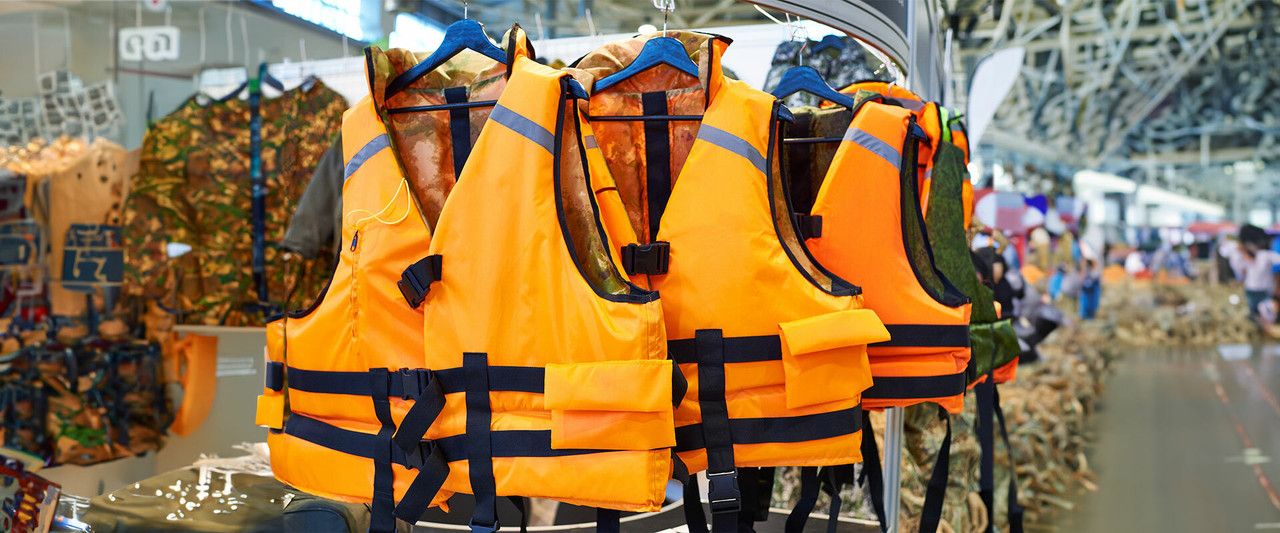
Choosing Your PFD: A Practical Guide to Safety & Comfort
A Personal Flotation Device (PFD), or life jacket, is one of, if not the single most important piece of boat and rock safety gear you'll ever buy. But let's be honest—for years, they were block style bulky, hot, and restrictive. The great news is that modern PFDs have changed completely. The gear in this category is designed to be worn, not just stowed. Whether you're a kayak angler who needs full arm mobility or a boater looking for a low-profile option, the goal is the same: find a jacket you'll forget you're wearing.
A Note From Our Local Experts
"'The best PFD is the one you'll actually wear,' and it's 100% true. How many people do you know that spend thousands of dollars on a new boat and set up only to skimp out on Life jackets and buy the cheapest restrictive box style? Will they even wear it? Probably Not!
My advice is to invest in comfort. A modern, lightweight inflatable yoke or a slimline PFD is the difference between wearing your safety gear all day or leaving it 'somewhere in the boat' and then when you actually need it… what happens?"
- Ben Czulowski, Owner, Fishing Tackle Shop | Boating angler and Retailer for 20+ Years
Understanding PFD Levels: What You Legally Need
This is where most people get confused, as the rules vary by state and activity. Here is a simple, real-world breakdown. Note: Always check your local state maritime authority for the exact, current laws for your area and vessel type.
✔
Level 100+ (Formerly Type 1): These are the high-buoyancy, "offshore" jackets. They are designed to turn an unconscious person face-up in the water. They are generally required when boating 'offshore' (the definition varies by state) or in other high-risk situations.
✔
Level 50 (Formerly Type 2): This is the most common PFD for inshore boating, estuary fishing, and watersports in smooth or partially smooth waters. They offer good flotation but are not designed to self-right an unconscious person. Most of the comfortable, vest-style PFDs fall into this category.
✔
Level 50S (Formerly Type 3): This 'S' stands for 'Specialist'. These are often the same buoyancy as Level 50, but they must meet specific standards for their sport (like skiing or kayaking). Many of the comfortable, high-cut kayak PFDs are in this class.
A Special Note on Kids Life Jackets
When it comes to safety gear for children, it's critical not to cut corners. A kids life jacket is not just a smaller version of an adult PFD; it's a completely different design. You should never, for any reason, put a small adult jacket on a child—it will not work and is dangerously unsafe.
The two key features of a proper kids PFD are a large, high-buoyancy collar, which is designed to help turn the child onto their back and keep their head clear of the water, and a crotch strap. This leg strap is the most important feature, as it ensures the life jacket cannot ride up over the child's head when they are in the water. When fitting a PFD on a child, it must be snug.
The Kayak PFD vs. The Boat PFD: Why They're Different
You should not use a standard boat PFD for kayak fishing. A kayak PFD is cut completely differently. The armholes are cut very high and wide to give you total freedom for a full paddle stroke without chafing. Most importantly, the foam flotation is concentrated higher up on the chest and back. This stops the PFD from riding up and "bunching" under your chin when you're in the seated position, which is a constant, annoying problem with standard jackets.
Inflatable Yokes vs. Foam Vests: A Real-World Comparison
This comes down to comfort versus maintenance.
- Foam Vests: Their advantage is simplicity. They just work. There's no servicing, no cylinders. They are inherently buoyant. Their downside is bulk and warmth, though modern paddle vests are excellent.
- Inflatable Yokes: Their advantage is comfort. It's massive. You barely know you're wearing one, which is perfect for anglers casting all day in the heat. Their downside is maintenance. They rely on a CO2 cylinder and an activation system (manual or auto) that must be inspected and serviced regularly.
How to Service Your Inflatable PFD
An inflatable PFD is useless if it's not serviced. You must check it before every single trip (look for visible wear, ensure the cylinder is secure, and the service indicator is green). Most manufacturers recommend a full self-service every 12 months (or after inflation). Self-service is simple: manually inflate the bladder with your mouth, leave it overnight to check for leaks, deflate it, check the cylinder's date, and repack it according to the instructions. It's a critical task. Please check manufacturer guidelines, as some jackets may not always be able to have a self-service and may need to be serviced by a professional PFD servicing centre like Sussex Marine and other service centres.
Frequently Asked Questions
I find PFDs hot and restrictive. What's the best option for casting all day in the heat?
This is the single biggest complaint we hear. The clear winner here is an inflatable 'yoke' style PFD. When un-inflated, it's just a small harness that sits on your shoulders. It doesn't hold heat, has zero bulk around your arms or torso, and gives you better less restrictive movement for casting. It's the only option you'll forget you're wearing on a 35-degree day.
How do I get the right fit for my PFD?
A PFD only works if it stays on you. It must be snug. Put the jacket on and tighten all the straps, starting at the waist and moving up to the shoulders. Once it feels snug, test it by getting someone to pull up firmly on the shoulder straps. The jacket should not ride up past your ears or chin. If it does, it's too loose or the wrong size, and it will float off you in the water.
What happens if I fall in wearing an auto-inflate PFD and it doesn't go off?
This is a common fear, but all automatic inflatable PFDs have a manual override. This is usually a bright red pull-cord that you can yank to puncture the CO2 cylinder and inflate the jacket instantly. This is why it's vital to know your gear. Before you even wear it on the water, locate the manual pull-cord and the oral inflation tube (a backup tube you can blow into) so you know exactly where they are in an emergency.