A Tackle Shop Guide to Jigging Lures
Jigging is no longer just a deep-water fishing technique of boat anglers. With the explosion of new styles like slow-pitch and shore jigging, anglers can now target fish at almost any depth, from a 5-metre inshore reef to the continental shelf. The key to success is understanding that each style of jig requires a different retrieve to work properly. This guide breaks down the main types we stock and how to fish them.
A Note From Our Local Experts
"I've watched the jigging trends change firsthand in the shop. Twenty odd years ago, it was all about heavy mechanical jigging for kings. Then came the micro-jigging boom for snapper. Now, we're seeing a massive shift towards Shore Jigging—anglers buying specifically designed casting jigs to throw off the breakwalls at Port Kembla or the ledges at Jervis Bay.
One of my personal favourite techniques, though, is the 'lazy' slow jig. When I'm drifting for flathead or snapper, I'll sometimes just drop a heavy, wide-profile slow jig like a Shimano Lucanus to the bottom, put the rod in the holder, and let the rock of the Quintrex 490 Fishabout do the work"
- Ben Czulowski, Owner, Fishing Tackle Shop (Ocean Storm)
Understanding the Four Main Jig Styles
Choosing the right jig comes down to your location and the species you are targeting. Here is how the different profiles stack up:
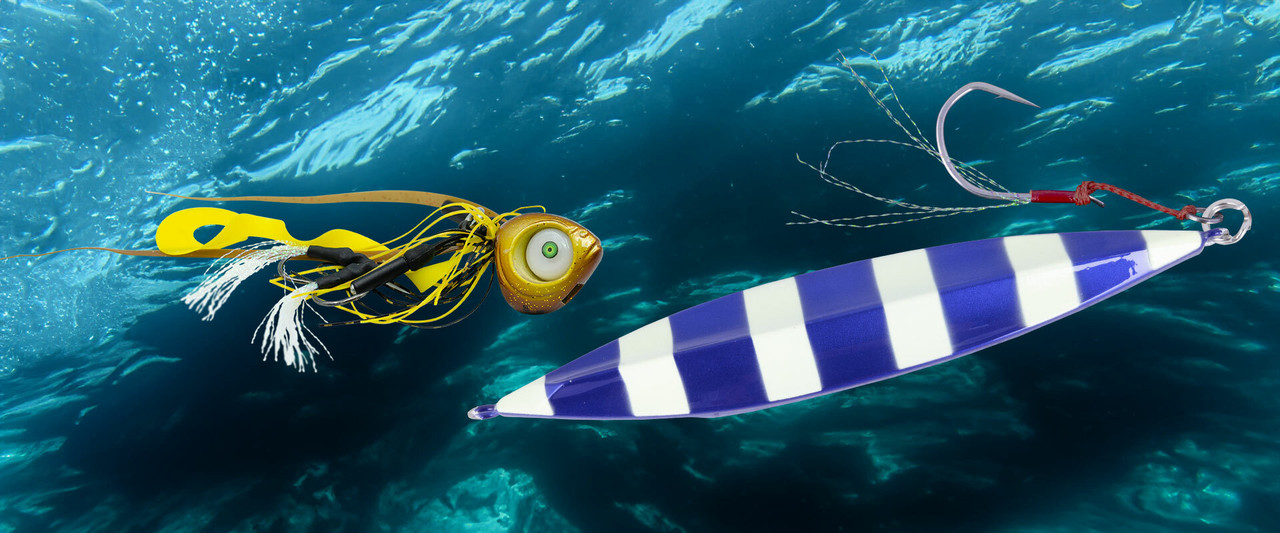
- Deep / Mechanical Jigs (Knife Jigs): These are long, thin, and streamlined. They are built to sink fast and be retrieved at high speed ("mechanical jigging"). This erratic, fleeing action triggers aggression strikes from pelagics like Kingfish, Amberjack, and Samson Fish.
- Slow Pitch / Leaf Jigs: These are wider and flatter. They are designed to fall slowly and flutter like a dying leaf. You don't wind these fast; you lift and drop them. They are deadly on bottom-dwelling predators like Snapper, Pearl Perch, and Dhufish that prefer an easy meal.
- Micro Jigs: Effectively a downsized version of the above. These small, light jigs (often 10g-40g) match the "hatch" of tiny baitfish. They are incredible for inshore reefs targeting Snapper, Trevally, and even Flathead.
- Shore Jigs: A rising category. These look like metal spinning lures but are rigged with assist hooks at the tow point rather than a rear treble. This rigging reduces snags when fishing from the rocks and provides a much better hook-up rate on fish attacking the head of the lure.
Technical Guide: Choosing the Right Weight
The most common mistake is using a jig that is too light. If your jig can't reach the bottom vertically, you aren't fishing effectively.
✔
The Depth Rule: A good starting point is 2g to 3g of weight for every metre of depth. For example, if you are fishing in 50 metres of water, you generally need a jig between 100g and 150g to stay vertical in the current.
✔
Wind and Current: If the current is ripping or the wind is pushing your boat fast, you will need to go heavier (up to 4g or 5g per metre) to prevent the line from scoping out at a 45-degree angle.
Frequently Asked Questions
Are jigging lures only for boat fishing?
Not anymore. While traditional vertical jigging is a boat technique, the rise of Shore Jigging has opened up this style to land-based anglers. Using specialised casting jigs from rock ledges, breakwalls, or even the beach is a highly effective way to target pelagics like Kingfish, Salmon, and Tailor without a boat.
Why do jigs use "Assist Hooks" on cord instead of trebles?
Assist hooks hang from the top tow point of the jig. This has two huge advantages. First, fish usually attack the head/eye of the bait, so the hook is exactly where the strike happens. Second, because the hooks trail above the jig body, they are far less likely to snag on the bottom compared to a treble hook hanging off the back.
Do I need a specialised jigging rod?
For mechanical (high-speed) jigging, yes. A proper jigging rod is parabolic (bends through the whole blank) which helps "bounce" the jig upwards, saving your energy. For slow-pitch or micro jigging, you can often get away with a standard boat rod or soft plastics rod, provided it can handle the lure weight.
Can I leave a slow jig in the rod holder?
Yes, this is a very effective technique often called "deadsticking." A heavy, wide-profile slow jig left in the rod holder will gently lift and flutter with the natural rock and roll of the boat. This subtle action is often irresistible to lazy fish like Flathead and Snapper.