A Tackle Shop Guide to Surf Fishing Combos
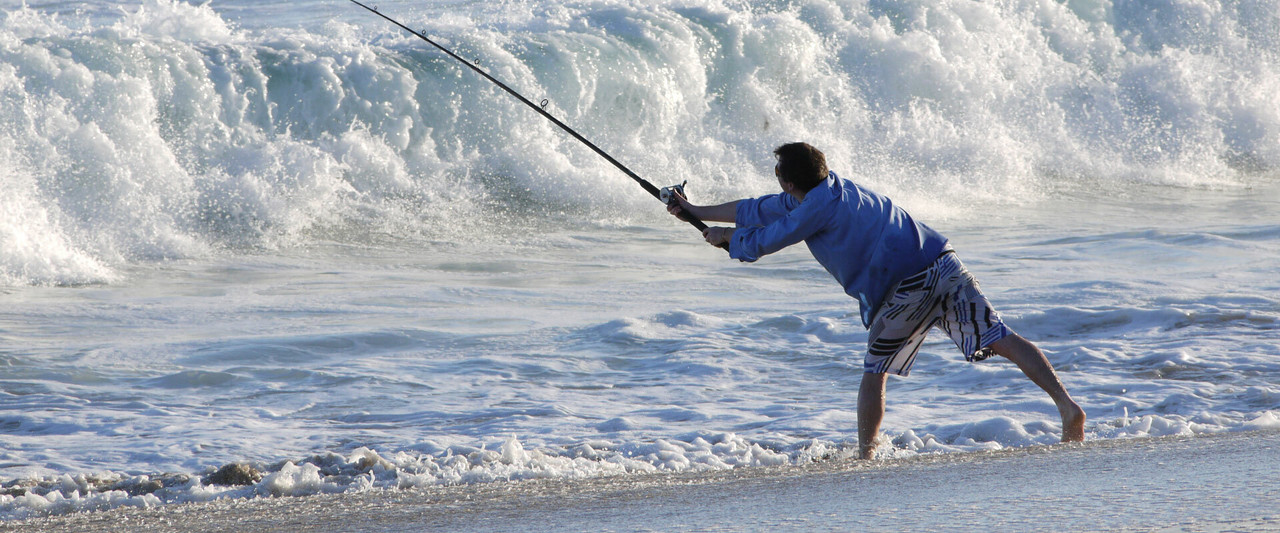
When you fish the beaches, the waves are constantly trying to push your tackle back to dry sand. If you have a combo that is too short in length, the wave height alone has the potential to drag a heavy sinker out of the gutter zone before a fish gets near it. A 12ft, 13ft, or 15ft beach rod combo provides the necessary height to keep your line above that kill zone of whitewash, keeping your baits in the strike zone longer, where the fish are feeding.
A Note From Our Local Experts
"Bombo Beach in Kiama is one of my regular local spots. The gutters tend to sit on the train station side of the beach, and I find the incoming tide through to the early outgoing is when the bites usually start heating up. I don't usually cast into the middle of the gutter — I work the edges. That's where I often tend to get more hits from salmon and other beach fish.
Because I am more so chasing the bigger fish like mulloway and Australian salmon, my bait of choice is whole California squid or squid heads. But I’ll often end up with a bycatch of the odd banjo ray or shovelnose shark that puts a solid bend in the rod, which I honestly don't mind at all. Whiting and bream are there too if conditions are right.
I fish with a Shimano Revolution 12ft Coastal rod with a Shimano Stella 10000SW. With that outfit, I can spin metal lures or fish bait on the same combo. For most beach anglers, you don’t need a reel with a Stella price tag; however, any 12ft+ rod paired with a reel 10000 or larger is a great start for beach fishing."
— Ben Czulowski, Owner, Fishing Tackle Shop (Ocean Storm) | 20+ years industry experience
What a Surf Combo Actually Needs to Do
Three things separate a dedicated surf combo from every other setup we sell in our online store.
✔
Leverage for Heavy Loads: While the length keeps your line out of the wash, a 12ft+ blank also acts as a physical lever. It allows you to 'load up' the rod to launch heavy sinkers and large baits out past the shore break without snapping the tip. (Check each of our listings for actual cast weights applicable to that model.)
✔
Spool Capacity & Balance: General surf fishing in Australia typically runs 15-40lb line class. Because larger species can peel line off your reel fast in open water, a large reel (6000 to 10000+) is highly beneficial. That extra physical weight at the handle end of your rod also helps counterbalance a long surf rod, stopping it from feeling tip-heavy.
✔
Sustained Drag Pressure: Mulloway, sharks, and rays don't give you a slow, polite fight. They can also use the coastal current to their advantage and can change direction at any given moment. The reels matched in our surf combos are chosen for their drag stability to excel with the line classes these rods are built for.
Pro-Tips: Surf Fishing, Rigging & Handling
- Sinkers for the Surge: The beach is notorious for washing your line in. A longer combo helps, but to further improve your hold on the sand, we recommend switching to a Star or Grapnel sinker. The edges of a star sinker physically bite into the sand, which can be an advantage in keeping your bait in the strike zone. If the current is also an issue, the wires on a grapnel breakaway sinker will help lock the rig into onto the bottom until you strike, which will release the sinker.
- The 'High-Sticking' Risk: When landing a large fish in the shore break, never lift the rod vertically (straight up). The weight of a fish, combined with the swell, can easily snap a long rod tip if you are fishing with one of the modern graphite rods. Keep the rod at a lower angle and use the momentum of an incoming wave to slide the fish onto the sand.
- Using Braid for Beach Fishing: Saltwater can sometimes cause certain braids to swell slightly if it traps water between strands, so when spooling your reel, instead of spooling right to the absolute edge, leave around a 2mm gap. A completely full spool casting into a coastal breeze can be a recipe for wind knots. Additionally, some anglers find that braid isn't great for abrasion on their local beach. If you find you are experiencing abrasion, try switching to monofilament fishing line or using a much longer leader.
Accessories for the Sand
Owning a surf fishing combo is only the start. Consider these accessories to complete your setup:
- PVC or Aluminium Sand Spike: A beach spike is a beneficial accessory when fishing the beaches. Not only can it assist in keeping your reel high out of the sand, but it can also sometimes provide added height to keep your line above the shore dump.
- Elastic Bait Thread: If using soft baits like pilchards or beach worms, you might find that these baits fly off the hook during a long-distance cast of a 12ft or longer rod. A few wraps of elastic bait thread can help keep your bait on the hook and remain presentable.
- Long Nose Pliers: Fish found on the beach can dish out some powerful thrashes when they have been landed. To minimise the risk of damage to the fish and to you, have a pair of long nose pliers handy when removing fishing hooks.
- Fishing Knife: When catching Australian salmon, if you are taking them home to eat, it is best to dispatch the fish and bleed them out straight away. The easiest way to do this is to have a good fishing knife on hand.
- Surf Sinkers: We have mentioned throughout our guide that Star sinkers or Grapnel sinkers are often the way to go when beach fishing. Have a range of sizes on hand to suit your rigs and the changing conditions.
Surf Combo Application Guide
Select the length based on the surf size and your target species.
| Rod Length |
Typical supplied Reel Size |
Primary Advantage |
| 12 Foot (3.6m) |
6000 - 10000 |
The standard all-rounder and best-selling size for us. Great balance between casting distance and manageable physical weight for extended periods of holding. |
| 13 Foot (3.9m) |
8000 - 14000 |
Extra leverage. Ideal for casting heavier sinkers and larger baits over a heavy shore break. |
| 14-15 Foot (4.2m+) |
10000 - 25000 |
Maximum clearance. Built to keep line high above massive swells and launch heavy payloads to distant gutters. |
Swipe →
Frequently Asked Questions
Why shouldn't I just use a 9ft rod for the beach if I can cast it far enough?
Casting distance is only half the battle. Once the bait is in the water, a 9ft rod can sit too low. The waves will constantly hit your line, dragging your sinker across the bottom and eventually washing it back to your feet. You can get away with a 9ft rod on a sheltered beach, a 12ft or longer rod, though, keeps the line high above the wave crests better, which is what actually allows you to hold bottom in the surf.
Do these surf combos come as 1-piece or multi-piece?
Most of the surf rod-and-reel combos we sell feature 2- or 3-piece rods. A 12ft 1-piece rod is almost impossible to transport in a standard or courier vehicle. Modern join technology, especially in brands like Penn, Shimano or Daiwa, means a multi-piece rod is just as good in performance as a single-piece rod.
Do all surf fishing combos come pre-spooled with line?
No, some of our combos include only the reel and rod, as they are sold as a blank canvas for your personal preferences. For general beach fishing, targeting fish like salmon and tailor, 20lb to 30lb braid is the standard. If you are specifically targeting large mulloway or sharks, you might move up to 50lb or so. We generally also suggest using a long 'shock leader' of fluorocarbon or monofilament to handle the abrasion of the sand and the massive pressure of the cast.
What is the best time and condition to fish a surf beach?
Moving water is the key when fishing the beaches in Australia. The incoming tide through to the early outgoing is generally the most productive window, as fish feed when there is a running current. A light to moderate swell will also stir up the sand and push baitfish into the gutters, which brings everything else. Flat, glassy water with no current is usually the least productive time to fish a beach. However, finding the right spot to fish on the beach is arguably the most important factor. A defined gutter on a slack tide may still fish better than a featureless beach on the perfect run. When you find a gutter, work the edges where the current breaks rather than casting straight into the middle of it.