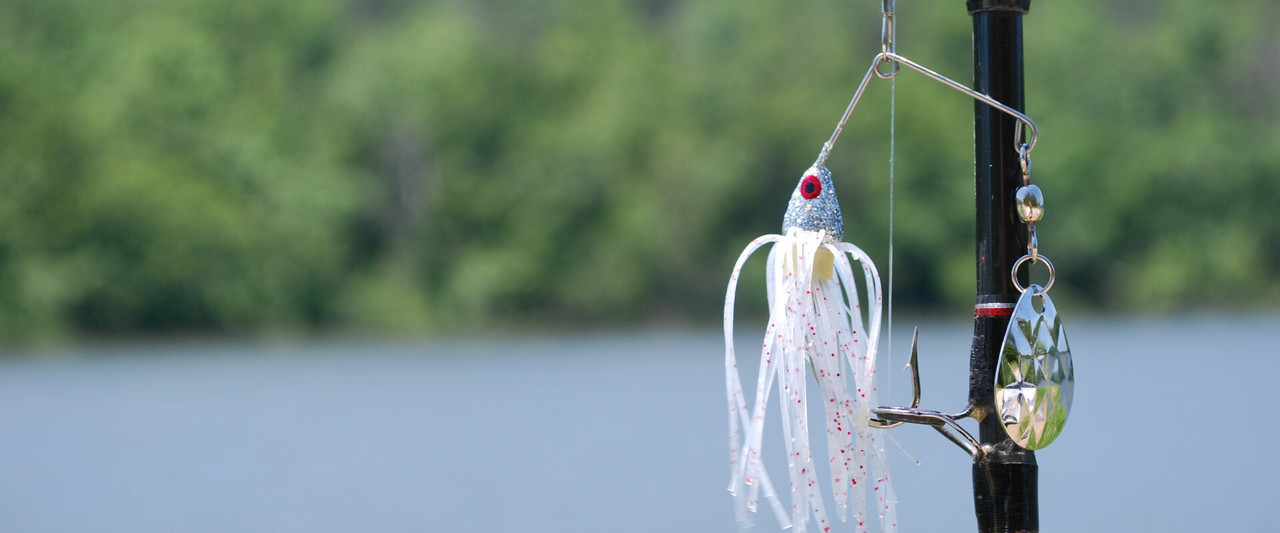
A Tackle Shop Guide to Spinnerbaits & Chatterbaits
Spinnerbaits and chatterbaits (bladed jigs) are the heavy-hitters of the reaction bait world. They don't look like a real fish like some of the modern styles of lures on the market, but once they hit the water, the combination of flash, vibration, and a pulsing skirt becomes a major trigger for Australian predatory fish. This guide breaks down the mechanics of these lures to help you choose the right weight and blade configuration for your local freshwater haunts.
A Note From Our Local Experts
"While Spinnerbaits and Chatterbaits are widely recognised for Murray cod and bass, my personal favourite way to fish them is for redfin. I’ve spent a few sessions at Scrivener Dam in Canberra, right next to the zoo, and when the redfin are on, a small spinnerbait is one of my top lure choices, especially in the TT lure brand.
The beauty of the spinnerbait in a place like Scrivener is its ability to bounce off the bottom and through the weed without fouling up. I find that redfin often respond to the 'flash' of a willow blade on a sunny day. If you’re fishing fresh water and finding the fish are tucked deep in the snags, a spinnerbait or a chatterbait is one of the lures I'd tell you to tie on."
- Ben Czulowski, Owner, Fishing Tackle Shop (Ocean Storm)
Mechanical Differences: Spinnerbaits vs. Chatterbaits
Both lures use a lead-head jig and a silicone skirt, but the "motor" that drives them is different.
- Spinnerbaits: Feature a wire arm with one or more rotating blades. The wire arm acts as a "fender," making the gear exceptionally snag-resistant. They are the benchmark for fishing submerged timber and fallen logs.
- Chatterbaits (Bladed Jigs): Use a hexagonal blade attached directly to the jig head. This blade doesn't spin; it vibrates frantically, causing the whole lure to weave and dart. Chatterbaits move more water and provide a harder "thump" that fish feel through their lateral lines.
Technical Focus: Blade Shapes and Vibration
The shape of the blade on your spinnerbait changes the displacement and "lift" of the lure.
✔
Willow Blades: Long and thin. They provide maximum flash and minimum vibration, allowing the lure to run deeper and faster. They are a top choice for clear water and bright days.
✔
Colorado Blades: Round and cupped. These create a massive, slow "thump" and provide lots of lift. These are preferred for murky water or when you need a slow retrieve to stay in the strike zone.
Pro-Tips for Bladed Lures
- The "Stinger" Hook: If you are getting "short-struck" (where the fish hits the lure but misses the hook), add a trailer hook. This is a single hook that sits behind the main jig hook. It improves your hook-up rate on selective redfin or bass.
- The "Burn and Kill" Retrieve: For chatterbaits, try winding quickly for three turns (the burn) and then stopping for a second (the kill). This causes the lure to flare its skirt and dart sideways, which is often when a follower will strike.
- Trailer Plastics: Most chatterbaits perform better with a soft plastic "trailer" attached to the hook, such as a Z-Man Slim SwimZ. This adds bulk, changes the vibration, and provides a target for the fish.
Frequently Asked Questions
Are spinnerbaits and chatterbaits popular for saltwater fishing?
Historically, these are freshwater lures designed for fish species like Murray cod, perch and bass. However, I’ve seen a few online examples where anglers use chatterbaits for flathead on the sand flats for something out of the box. Spinnerbaits are also effective for mangrove jack in heavy timber. Just be aware that because they are mostly built for fresh water, you must rinse the lures thoroughly with fresh water after every session to prevent salt corrosion on the blades and wire arms.
What is the best weight spinnerbait for general Australian fishing?
For most estuary and river work targeting bass, perch, or redfin, a 1/4oz or 3/8oz model is the standard choice. If you are targeting large Murray cod in deep river holes or fast current, you will need to step up to a much heavier 5/8oz or 1oz+ model to stay near the bottom.
Why do some spinnerbaits have two different blades?
This is a "tandem" rig. It usually pairs a small Colorado blade for vibration with a larger Willow blade for flash. This provides a balanced presentation that works in a wide variety of water clarities and light conditions.
How do I stop my chatterbait from spinning in the water?
If a chatterbait spins rather than vibrates, it usually means your trailer plastic is not rigged perfectly straight. Even a slight bend in a soft plastic trailer can act like a rudder, causing the lure to roll. Re-rig the plastic so it is dead-straight on the hook shank.