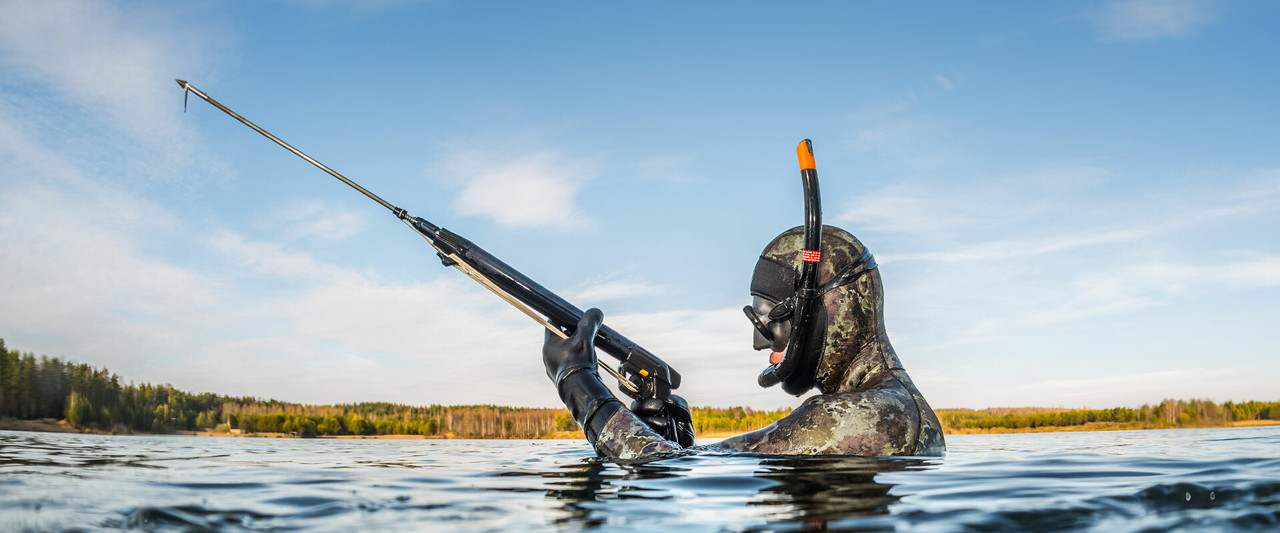
A Tackle Shop Guide to Spearguns
Transitioning from a hand spear to a trigger-operated speargun gives you the velocity and range needed to target larger, faster fish. However, the biggest hurdle for new divers is not finding the fish; it is physically loading the rubber and manoeuvring a long shaft in the ocean surge. Buying a gun that is too long for your local reef will simply result in missed shots and physical fatigue. Matching the gun's length and barrel material to your physical strength and your diving environment is a better way to spearfish.
A Note From Our Local Experts
"At Ocean Storm, we have been selling spearguns for over two decades, and while I am a rod-and-reel angler and don't personally spearfish, I am, however, constantly listening to the feedback of our customer base, my family members who do spearfish, and I am also regularly discussing our range with our suppliers to keep up to speed on the latest technology and trends so that I can offer you a wealth of information and advice.
My focus isn't on high-end spearguns but rather on a range that balances value and reliability over flashy features. That's why I choose to stock reputable brands that provide this balance. I stock well-known local brand names like Undersee. Models such as the Phantom, Zap, and Woodie are steady sellers here at Ocean Storm, and a key benefit of stocking Aussie brands like Undersee is that spare parts are rarely an issue and available in a timely manner.
When beginners ask me about barrel material, I pass on what the experienced local divers tell me. The guys spending hours in the water consistently report that timber guns, like the Woodie, feel better balanced. The natural buoyancy of the wood helps it sit well in the hand, and the dense mass absorbs the kick of the shot much better than lighter aluminium models."
— Ben Czulowski, Owner, Fishing Tackle Shop (Ocean Storm) | 20+ years industry experience
Decoding Speargun Mechanics
Understanding what each component does helps you choose the right setup for your style of diving.
✔
Aluminium Barrels (e.g., Zap, Phantom): Lightweight out of the water and very easy to track side-to-side underwater. They require very little maintenance other than a freshwater rinse, but the lighter metal does transfer more physical recoil to your wrist when fired.
✔
Timber Barrels (e.g., Woodie): Solid timber is denser than a hollow aluminium tube. This extra physical mass absorbs more of the kinetic energy when the rubber snaps forward, reducing the recoil felt in the wrist. Additionally, wood striking reef produces a dull thud rather than the sharp metallic 'clank' of an aluminium barrel.
✔
Railguns (Integrated Rail): A standard speargun barrel is perfectly round, leaving the spear to rest only at the muzzle and mechanism. A railgun features a moulded track running the entire length of the barrel. This physically guides the spear out of the gun, preventing the shaft from flexing or 'whipping' under high tension and increasing accuracy on long-range shots.
✔
Single vs. Twin Rubbers: A single thick rubber provides plenty of punch for standard rock hopping and is manageable to load. Twin rubbers give you more range for open water, but they double the physical effort required to load the gun and increase the recoil.
✔
The Flopper: The stainless spear on some of the spearguns we sell features a 'flopper' (a hinged metal barb) near the tip. When the spear punches through the fish, the flopper opens up, preventing the fish from sliding back off the smooth shaft during the fight. Some spearguns, like the Zap, are interchangeable, so you can change a flopper out for a prong head and vice versa.
Pro-Tips: Loading and Safety
- The Golden Rule: Never load or fire a speargun out of the water. Spearguns are mechanically designed to rely on the heavy hydrodynamic drag of water to slow the shaft down. If fired in the air, the rubber contracts at unrestricted velocity, causing the wishbone or shaft to slam into the muzzle. This raw impact frequently cracks the plastic housing, snaps the shooting line, and can cause the spear to rebound dangerously.
- Hip vs. Chest Loading: For shorter guns (up to the 1000 size), rest the butt of the gun firmly on your hip or upper thigh, grab the rubber with both hands, and pull it back in one smooth motion to the notch. For longer guns (like the 1400 size), you must brace the butt against your chest to get the physical leverage required to stretch the rubber.
- Rubber Maintenance: Saltwater does not destroy latex rubbers; UV light and constant stretching do. Always rinse your gun with fresh tap water and store it in a cool, dark garage. Inspect the rubber near the muzzle for micro-tears before every dive. Replacement rubbers are usually available by special order.
Speargun Application Guide
There are several sizes of Spearguns available; however, there are three core sizes we often sell more so than any other sizes. Match the gun length and material to where you intend to dive.
| Gun Size (Approx Length) |
Barrel Material |
Target Environment |
| 750 Size (~2ft 6in) |
Aluminium |
Shallow reef washes, rock hopping, checking caves. |
| 1000 Size (~3ft 6in) |
Aluminium or Timber |
General purpose coastal diving, the standard all-rounder. |
| 1400 Size (~4ft) |
Timber |
Clear open water, deep drop-offs, targeting pelagics like kingfish, bonito, tuna. |
Swipe →
Frequently Asked Questions About Spearguns
What length speargun should I buy for my first gun?
Do not buy anything over the 1000 size for your first gun. A 750 or 1000 size gun is the practical sweet spot for Australian coastal diving. It is short enough to easily load on your hip and highly manoeuvrable when tracking fish in the wash. A gun that is too long is physically difficult to load and too clumsy for learning the basics on shallow reefs.
What exactly is a "railgun" and do I need one for local diving?
A railgun has a grooved track running the full length of the barrel that guides the spear shaft. If you are targeting large pelagics like Kingfish or Tuna in open water and using twin heavy rubbers, a railgun is highly recommended. The track stops the long spear shaft from flexing or 'whipping' under that extreme tension when you pull the trigger, ensuring an accurate, straight shot. However, if you are just poking around shallow washes with a single-rubber 750 size gun for bream or flathead, a standard round barrel is more than capable.
What is the benefit of timber spearguns like the Woodie compared to metal options like the Zap and Phantom?
It comes down to mass and noise. An aluminium gun is light and highly accessible. A timber gun is denser. That extra physical mass absorbs the violent recoil of the rubber snapping forward, giving you a much smoother, accurate shot. Timber is also naturally buoyant, helping the gun balance in your hand, and it does not make a loud metallic clank if you accidentally bump it against a rock, which keeps you stealthy.
Do I need a special licence to buy or use a speargun in Australia?
You do not need a firearms licence to purchase or use a standard rubber-powered speargun. However, you are subject to strict state fisheries laws. In states like NSW and Victoria, you must hold a standard recreational fishing licence. Furthermore, spearguns are strictly prohibited in all freshwater systems across Australia and are heavily regulated in marine park sanctuary zones. Because they are highly dangerous equipment, we strongly advise that any minors using them do so under close adult supervision. Always check the current state regulations for updates, as regulations can change.
Can we ship Spearguns internationally outside of Australia?
No. Due to strict customs regulations, international aviation security rules, hunting equipment restrictions, and the high cost of shipping oversized long tubes, we only dispatch spearguns to addresses within Australia.