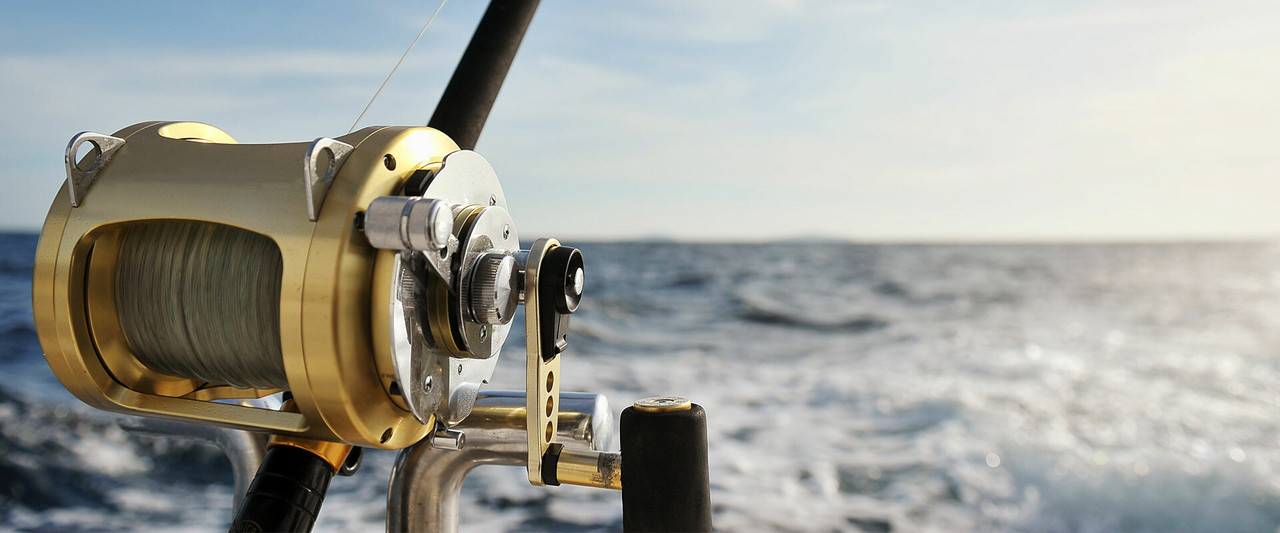
A Tackle Shop Guide to Game Fishing Combos
Game fishing pushes your tackle, and even you, to its limits. You are relying on your gear to act as a winch to haul heavy weight from the depths, while surviving blistering surface runs that generate enough friction to melt monofilament line. The combos in this category are built specifically to manage that heat and give the angler the maximum physical leverage possible over the fish. We’re stocking proven brands and models for sale, like Shimano TLD and Tiagra.
A Note From Our Local Experts
"We get many runs of game fish out on the shelf and even in close here in the Illawarra and Shoalhaven. I'll be honest, I spend most of my time chasing sportfish on light tackle rather than backing down on marlin and tuna. But selling this game gear for over two decades means I hear exactly what works and what fails out on the shelf.
The main thing beginners underestimate is the physical toll. You can't just buy a heavy rod, hook a tuna, and expect your arms to do all the work. If you are tied to a fish for two hours on 24kg gear without a harness, your back is going to burn out. I quickly learnt this the hard way when I first tried game fishing locally. Having a proper setup like a Black Magic Equalizer kit transfers that load to your legs, which is what actually allows you to finish the fight in a much easier manner.
The other big lesson is drag pressure. Never guess it by hand. A standard rule of thumb is setting your 'strike' drag to a third of your line class, pulling from the rod tip. So on a 24kg outfit, you want roughly 8kg of drag to start with."
— Ben Czulowski, Owner, Fishing Tackle Shop (Ocean Storm) | 20+ years industry experience
Understanding the Game Fishing Combo Hardware
Game fishing combos look bulky compared to standard offshore rods, and that extra bulk serves a purpose.
✔
Roller Guides: When a fish peels hundreds of metres of line under heavy tension, the friction generates serious heat. Standard ring guides can literally melt thick monofilament. Roller guides function like little pulleys to roll with the line and drop that friction right down.
✔
Lever Drag Overheads: A star drag is fine for snapper, but a lever drag lets you pre-set a precise 'Strike' pressure with a set of scales back at the dock. Once you're fighting a fish, sliding the lever tells you roughly how much pressure you are applying without guessing.
✔
Slick Butts: You'll notice some heavy rods use a smooth style butt instead of standard EVA foam grips. Foam tends to bite and jam inside a rod holder or gimbal belt when a fish is pulling hard. The slick design just slides out much more easily. Check out individual listings for details.
Pro-Tips: Game Fishing Rigging
- Set the Drag with Scales: Don't just pull line off the spool with your hand to guess the tension. Use a spring scale hooked to the line, and pull it directly from the rod tip with a bend in the blank. This gives you a true reading that factors in the friction of the guides.
- Braid Backing and Mono Topshots: Monofilament line stretches, which absorbs the violent shock of a marlin hitting a trolled skirt. But thick mono eats up spool capacity fast. A common fix is packing the reel with thin braid backing, then adding a few hundred metres 'topshot' of mono to get that built-in shock absorber.
Game Fishing Combo Application Guide
Match the combo class to the target species and line class you intend to fish.
| IGFA Class |
Typical Target Species |
Common Application |
| 10kg–15kg |
Mahi Mahi, Wahoo, Small Tuna, Striped Marlin (light tackle) |
Light tackle game, stand-up fishing, spinning on pelagics |
| 24kg |
Yellowfin Tuna, Striped Marlin, Broadbill Swordfish |
General game trolling, stand-up or chair, most common class |
| 37kg |
Black Marlin, Bluefin Tuna, Large Yellowfin |
Heavy game trolling, fighting chair, serious offshore |
| 60kg+ |
Heavy Black Marlin, Large Bluefin Tuna |
Heavy tackle game, fighting chair, Cairns-style black marlin |
Swipe →
Frequently Asked Questions
What should I look for when buying a game fishing combo for the first time?
If you are new to game fishing, a 24kg class combo covers the broadest range of Australian game species and is the most practical entry point before committing to heavier or lighter specialist gear.
Why are game rods so short compared to regular offshore rods?
Think of the rod as a lever. If you hook a heavy fish on a long rod, the fish has all the leverage against your arms. A short, stubby rod—often under 6 feet—flips that leverage back to you. It makes it much easier to use your legs and back to slowly inch a heavy fish up from the depths without too much drama.
Do I absolutely need a fully rollered rod?
It really depends on what line you run. If you're dragging heavy 24kg or 37kg mono, roller guides are a very smart choice to reduce heat friction on those screaming runs. But if you're pitching live baits on 15kg gear with modern braid, high-quality standard ring guides will usually do the job just fine and require less maintenance.
Can I use a large 18000 or 20000 spinning combo instead of an overhead for marlin?
You can, and it is a very popular technique for "pitching" live baits or casting large poppers at feeding fish because a spinning reel is much easier to cast. However, a spinning reel lacks the raw, direct-drive winching torque of an overhead. If you plan to spend all day trolling heavy skirts, or you hook a stubborn tuna that decides to sit 100 metres straight down, a traditional overhead game combo is a more efficient option for hauling it up.
Do I need to buy a gimbal belt and harness?
For 10kg and 15kg gear, you can often get away with a basic gimbal pad to protect your groin. Once you start using 24kg or 37kg stand-up gear, trying to hold that kind of drag pressure with just your arms gets dangerous quickly. Using a proper kidney harness and gimbal belt makes a world of difference. It clips to the reel lugs and shifts the heavy load down to your legs and lower back, taking the strain off your arms.